And a premise: For Louisiana high school hopes, nothing beats the 1970s. Yes, six decades ago for greatness.
We’ve done the research (it took days) and we’ll put it out there. The competition is stiff; Louisiana has a helluva history for athletic talent, and you could pick any of the last six decades — through today — as the best for basketball and not be wrong (it’s subjective).
But we’ll take the ’70s.
Admittedly, we’re partial, having covered — for Shreveport’s newspapers — seven state tournaments in those 10 years. Saw some great players then, and the idea for this blog came from two early 2021 developments:
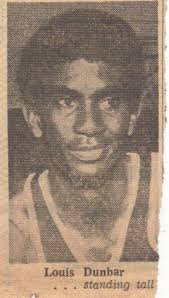
(1) The selection and upcoming (delayed) induction of Louis Dunbar to the Louisiana Sports Hall of Fame;
(2) An “SEC Storied” production on the SEC Network on the 1978 Kentucky NCAA men’s basketball championship team that included Rick Robey.
Dunbar and Robey. Big men in a big time. With plenty of ’70s company …

Start the list with Robert Parish, and yes, he’s a personal favorite, with close ties to the schools where he played (Woodlawn High, Centenary College).
Ask me, and I’ll tell you Robert is the best player to come out of a Louisiana high school (certainly the best 7-footer). The most regular-season games played by anyone ever in the NBA over an astounding 21 seasons, four NBA championships (with an assist from Larry Bird and Michael Jordan), the Naismith Basketball Hall of Fame.
And, yes, I know that puts Robert above Bob Pettit, Willis Reed, Elvin Hayes, Karl Malone, Joe Dumars and others in my estimation.
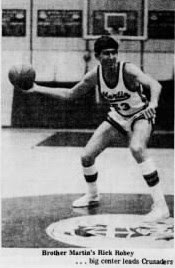
Watching the SEC story on Robey was a reminder of his unique achievement: state champion (Brother Martin in New Orleans, 1974), NCAA champion (Kentucky) and NBA champion (with the Celtics). Doubt any player in Louisiana history can match that.
(Reminder, too: Robey (6-foot-11) was a backup center to Parish for five years with the Celtics.)
As I’ve written before, several times, Dunbar –a high school and college rival of Parish’s — was the most versatile, most talented Louisiana high school player I’ve seen. At 6-foot-8, he could, and did, play anywhere on the court; he was a Magic-like point guard and the future Globetrotters “clown prince,” player personnel director and coach.
The start of the 1970s also gave us the greatest scorer in high school basketball in the country to that point: Ebarb’s Greg Procell, the rapid-fire hot shot 6-foot guard whose 6,702 points (1966-70) included the 100-point night he had against Elizabeth on January 29, 1970.
What a start to the decade that was.
Louisiana high school basketball, we would guess, has improved by the decade as players are bigger and stronger. Personally, I can’t say for sure because we’ve been gone from there for more than three decades.
But he’s a major reason why the game grew — and was so much fun to watch — in the 1970s: full integration.
—
The 1969-70 school year was the last year of operation for the Louisiana Interscholastic Athletic and Literary Association (LIALO), the all-black schools’ organization which had existed for decades and included some 185 schools.
There was some newspaper coverage of the LIALO, but for the most part, its championships were conducted in a separate — and not as publicized — setting.
The last LIALO championships — state basketball tournament in March — were in 1970. Parish, then a sophomore at Union High in Shreveport, played there. But we didn’t get to see any of the sensational Parish vs. Dunbar (Union vs. Webster High) battles in 1969-70. We only read about them.
Because some students (and athletes) transferred from all-black schools to mostly white ones — these were majority-to-minority transfers — and because New Orleans private schools were beginning to integrate, the Louisiana High School Athletic Association (LHSAA) state basketball tournaments in 1969 and 1970 included talented players such as Collis Temple of Kentwood, Skip Brunet and Dale Valdery of St. Aloysius/Brother Martin, Melvin Russell of Woodlawn and Jeff Sudds of Captain Shreve.
That was just a preview of what was to come.
By the fall of 1970, the great majority of the LIALO schools were either closed or reduced to middle schools, and with that came the full influx of black athletes into LHSAA schools. Plus, the all-black schools that remained open moved to the LHSAA, too.
All of a sudden, the game became faster and played much more above the rim. Dunks were rare before integration; afterward, there were some rim-rattlers … and crowds going nuts about them.
My opinion: Other than in New Orleans — especially at the Catholic League schools — and at the smaller, rural, non-football-playing schools (Class B and C) around the state, the ones where teams could play 50-60 games a season, with a dozen tournaments — basketball was a secondary sport in Louisiana high schools through the decades … until perhaps the mid-1950s.
But it began changing at the larger schools for several reasons: (1) bigger gyms were built and opened — for example in Shreveport at Byrd and Fair Park late in 1956; (2) more basketball-specific coaches took over programs, rather than just football assistants as caretakers; and (3) more players whose main sport was basketball and who weren’t just playing another sport after football season ended.
The biggest step, though — and we’ve written about this (https://nvanthyn.blogspot.com/2020/03/louisianas-marsh-madness-was-magic.html) — was the start of the state basketball tournament, the Top Twenty, in 1961.
That took the last two rounds of the state playoffs from the smaller home gym to the big stage where the fans got 3-to-5 days of championship basketball.
Can’t judge what high school basketball coaching is like these days. Can tell you, state-wide, it was high caliber in the late 1950s, 1960s and 1970s.
Another big step was master motivator Dale Brown taking over the LSU men’s coaching job in 1972-73, tirelessly promoting the game state-wide and eventually being able to recruit many of the state’s top stars to play for the Tigers instead of heading elsewhere.
But through the late 1950s, 1960s and into the 1970s, the Louisiana state colleges had outstanding coaches/promoters, too: Ralph Ward, Fred Hobdy, Orvis Sigler, Lenny Fant, Cecil Crowley, Billy Allgood, Scotty Robertson, Beryl Shipley, Tynes Hildebrand, Don Landry, Benny Hollis.
—
Below is the list of the state’s best high school boys basketball players, by decades (these are based on their senior years). We don’t have space for detail on their careers). But we’ll list the most prominent ones first.
Please remember: This does not include such names as Bill Russell, Clyde Drexler and Marques Johnson — all born in Louisiana but long gone by the time they were in high school.
Nor does it include some of the all-time Louisiana college greats such as Pistol Pete Maravich, Shaquille O’Neal, Chris Jackson (Mahmoud Abdul-Rauf), Mike Green, Bill Reigel and Dwight Lamar. All were imports from out of state.
We are going to start with the 1970s, because that’s our No. 1 choice. But we, in particular, loved the 1960s (my high school decade), and the 1980s are pretty darned strong, too.
If you want a starting five currently active in the NBA, here are Paul Millsap, D.J. Augustin, Garrett Temple, Robert Williams III and Skylar Mays.
Take your pick of decades.
—
1970s
Robert Parish (Woodlawn-Shreveport); Louis Dunbar (Webster-Minden); Calvin Natt (Bastrop); Rick Robey (Brother Martin-New Orleans); Larry Wright (Richwood-Monroe); Orlando Woolridge (Mansfield); Mike Sanders and John Rudd (DeRidder); Bruce Seals (Booker T. Washington-New Orleans); Kenny Simpson (Fair Park-Shreveport); Collis Temple (Kentwood); Greg Procell (Ebarb); Aaron James (Cohen-New Orleans); Edmond Lawrence (W.O. Boston-Lake Charles); Kenny Natt (Bastrop); Jeff Sudds and Mike Harrell (Captain Shreve), Skip Brunet, Dale Valdery and Glenn Masson (St. Aloysius/Brother Martin-New Orleans); Steve Cooley (Bolton-Alexandria); Walter “Tootsie Roll” Meshell (Ebarb); Chris Raymond (Plaquemine), Sammy White (Richwood-Monroe); Jeff Cummings (Rummel-Metairie); Mike McConathy (Airline-Bossier City); Billy Burton (Booker T. Washington-Shreveport); Doug Williams (Cheneyville); Floyd “Super Dragon” Bailey (Central Dubberly); Carl Kilpatrick (Bastrop); Carlos Zuniga (Holy Cross-New Orleans); Tommy “Pop” Green and Ethan Martin (McKinley-Baton Rouge); Victor King (Newellton); Lester Elie (Cloutierville); James Ray (L.B. Landry-New Orleans); Jordy Hultberg (De La Salle-New Orleans); Fred Chaffould (Carroll-Monroe); Wade Blundell and Barry Barocco (Rummel-Metairie) Earnest Reliford (Ashland); Wayne Waggoner (Logansport); Sean Tuohy (Newman-New Orleans); Keith Richard and Howard “Hi C” Carter (Redemptorist-Baton Rouge); John Derenbecker (Country Day-Metairie Park); Paul Thompson and Frederick Piper (Peabody-Alexandria); Tyrone Black (Capitol-Baton Rouge); Cherokee Rhone (Springhill); Dave Simmons and Johnny Jones (DeRidder); Larry Wilson (Central Lafourche).
Future NFL stars: Sammy White (Grambling WR-Minnesota Vikings), Doug Williams (Cheneyville-Grambling QB, Super Bowl MVP for Washington Redskins), Carlos Pennywell (Captain Shreve-Grambling WR-New England Patriots).
Future LSU QB Alan Risher, Salmen-Slidell (All-State football and basketball).
Consider, too, that Karl Malone, Joe Dumars, John “Hot Rod” Williams, Leonard Mitchell and Benny Anders — big stars in the early 1980s — did play as underclassmen in the 1970s.
—
1940s
Warren “Dr. Red” Perkins (Warren Easton-New Orleans); Frank Brian (Zachary); Nick Revon (St. Aloysius-New Orleans); John McConathy (Bryceland); Billy Wiggins (Winnsboro).
1950s
Bob Pettit (Baton Rouge High); Jackie Moreland (Minden); Dick Brown (Oak Grove); Jimmy “Red” Leach (Florien); Ray Germany (Holly Ridge); Bobby James (Ruston); Larry Teague and George Nattin (Bossier); Ellis Cooper (Springhill); Gene Wright (Negreet); Phil Haley (Belmont); Glenn Cothern (Fortier-New Orleans); Pete Gaudin (De La Salle-New Orleans); Raymond Arthur (Natchitoches); Jerry Callens (Pleasant Hill); Harold Ray Strother (Plainview-Glenmora); Maury Drummond (Istrouma-Baton Rouge); Max Lewis (Simsboro).
1960s
Willis Reed (Lillie); Elvin Hayes (Rayville); Bob “Butterbean” Love and Lucious Jackson (Morehouse-Bastrop); Charles “Cotton” Nash (Lake Charles); Don Chaney, Cincy Powell and Fred Hilton (McKinley-Baton Rouge); Bob “Lil’ Abner” Hopkins (Jonesboro); James Silas and Jimmy Jones (McCall-Tallulah); Charles Beasley (Fair Park-Shreveport); Leslie Scott (Scotlandville-Baton Rouge); Wilbert Frazier (Webster-Minden); Jerry Hood, Charles Sheffield and Leon Barmore (Ruston); Glynn Saulters (Lisbon); Barrie Haynie and Billy Ray (Ringgold); Donnie Henry (Athens); Walter Ledet (St. Mary’s-Natchitoches); Wayne Pietri and John Arthurs (De La Salle-New Orleans); Bill Wilson (Baton Rouge); Jerry Salley (Pleasant Hill); Bob Benfield (Byrd-Shreveport); James Speed (Valencia-Shreveport); Harold Sylvester (St. Augustine); Cecil Upshaw and Tommy Thigpen (Bossier); Bobby Lane (Newman-New Orleans); George Restovich (Jesuit-Shreveport); Herbie Mang, Billy Fitzgerald and Fabien Mang (Jesuit-New Orleans); James Wyatt (Belmont); Billy Jones (Pineville); Charles Bishop (Summerfield); Al “Apple” Sanders (Baton Rouge); James “Poo” Welch (LaGrange-Lake Charles); Kenny Covington (Haughton); Jerry Brandon (Zwolle); Tommy Joe Eagles (Doyline); George Corley (Florien); Melvin Russell and Larry Davis (Woodlawn-Shreveport).
1980s
Karl Malone (Summerfield); Joe Dumars (Natchitoches-Central); Avery Johnson (St. Augustine-New Orleans); P.J. Brown (Winnfield); Benoit Benjamin (Carroll-Monroe); Randy White (Huntington-Shreveport); Bobby Phills (Southern Lab-Baton Rouge); Jaren Jackson (Cohen-New Orleans); John Williams (St. Amant); Robert Pack (Lawless-New Orleans); John Tudor (Pineville); Wayne Smith (Trinity Heights-Shreveport); Derrick Taylor (Redemptorist-Baton Rouge); Nikita Wilson (Leesville); Anthony Wilson (Plain Dealing); David Benoit (Lafayette); Ervin Johnson (Block-Jonesville); Keith Smart (McKinley-Baton Rouge); Leonard Mitchell (St. Martinville); Larry Robinson (Airline-Bossier City); Bobby Joe Douglas (Marion); Willie Jackson (Sibley); Benny Anders (Bernice); Donald Royal (St. Augustine-New Orleans); Gerald Paddio (Rayne); Derrick Zimmerman (Wossman-Monroe); Don Redden (Ouachita-Monroe); Michael Cutright (Zwolle); Fess Irvin (East Ascension); Tim Breaux (Zachary); Ledell Eackles (Broadmoor-Baton Rouge).
1990s
Kerry Kittles (St. Augustine-New Orleans); Stromile Swift (Fair Park-Shreveport); Randy Livingston (Newman-New Orleans); Marcus Fizer (Arcadia); Billy Thomas (Loyola College Prep-Shreveport); Clarence Ceasar and Tierre Brown (Iowa); Kedrick Brown (Zachary); Dedric Willoughby (Archbishop Shaw-Marrero); Gerard King (McDonogh-New Orleans); Jerald Honeycutt (Grambling); Andre Brown (Vandebilt Catholic-Houma); Kedrick Brown (Zachary); Lester Earl (Glen Oaks-Baton Rouge); Mark Davis (Thibodaux); Mike Smith (West Monroe); Bernard King (Gibsland-Coleman).
2000s
Paul Millsap (Grambling); D.J. Augustin (Brother Martin-New Orleans); Garrett Temple and Glen “Big Baby” Davis (University Lab-Baton Rouge); Brandon Bass (Capitol-Baton Rouge); Greg Monroe (Helen Cox-New Orleans); Tyrus Thomas (McKinley-Baton Rouge); Danny Granger (Grace King-Metairie); Marcus Thornton (Tara-Baton Rouge); Chris Duhon (Salmen-Slidell); Von Wafer (Pineview-Lisbon); Elijah Millsap (Grambling); Tasmin Mitchell (St. Martinville); Matt Derenbecker (Country Day-Metairie Park); Demond “Tweety” Carter (Reserve Christian).
2010s
Robert Williams (North Caddo-Vivian); Skylar Mays and Wayde Sims (University Lab-Baton Rouge); Jared Butler and Ricardo Gathers (Riverside-Reserve); Langston Galloway (Christian Life-Baton Rouge); Ja’Vonte Smart and Damion James (Scotlandville-Baton Rouge); Markel Brown (Peabody-Alexandria); Elfrid Payton (John Ehret-Marrero); Jarell Martin and Brandon Sampson (Madison Prep-Baton Rouge); Melvin Frazier (Higgins-New Orleans); Jacob Evans (St. Michael’s-Baton Rouge); Mitchell Robinson (Chalmette).