Simple Feed
October 8, 2021
A Tip of the Pick to a Shreveport and Nashville Treasure

First ran in Gannett papers Sunday, September 26, 2021
In baseball, a five tool player can run, throw, field, hit for average, and hit for power.
In the final installment of our two-part tribute to Shreveport’s own Jerry Kennedy — he grew up on Huntington Avenue, graduated from C.E. Byrd High, and became a Nashville institution — we’ll suggest with authority that easy-on-the-ears Jerry K is a five-tool player in his arena: he can produce, arrange, win Grammys, pick a guitar and dobro for WAY above-average, and pick for power.
Stud Alert!
Jerry Kennedy, now 81 and retired in Nashville where he moved in 1961—seems normal if you’re signed to an RCA Records contract at age 11 as he was — will gracefully talk about his career, but he’ll deflect all he’s accomplished and all the joy he’s brought to music lovers in his career to the artists he either produced or played for.
We wrote about him last week because of a recent book dedicated to him, “The Music of The Statler Brothers: An Anthology” by Don Reid, the group’s lead singer. It was released in 2020 and dedicated to Jerry, who produced country music’s most awarded group for four decades and 40 albums. Jerry is mentioned dozens of times because without him, there’s no Statlers as we know them. (This bureau encourages you to get a copy and strap in for a front-row seat to all those recording sessions and a behind-the-scenes listen to every song the group ever recorded. I admit to being partial—but millions of fans can’t be wrong.)
It was a joy to read mail this week from his family and friends and fans and former classmates in response to the praise of Jerry, whose humility is refreshing and sincere to the point of being semi-comical, considering his body of work.
“He doesn’t talk about himself; you have to pry it out of him,” his son Gordon, a multi-Grammy Award winning songwriter, guitarist, and record producer, wrote to me this week. “I am still finding out about records he played on! I will never forget a friend telling me some years back that he didn’t know my father played on Dylan’s ‘Blonde On Blonde’ LP. I said ‘I didn’t know either!’ I have jokingly said in recent years that I need to write a book about my father…so I can read it!”
He never really wanted to be a star. “I wanted to play rhythm guitar, sing harmony, write songs, and have nobody recognize me,” he told me this summer. And in a way, it worked out. And in another way, it didn’t. He was just too good.
Gordon and this two brothers—they’re all in the music biz—grew up listening many evenings at home to whatever music their dad had recorded that day, whether it was playing on a Dylan or Elvis or Orbison record or playing on and producing the Statlers, Roger Miller, Jerry Lee Lewis, or Tom T. Hall.
It was Jerry who put together the core group of musicians who would work together for decades during the Statlers’ record-setting run at Mercury. It was Jerry who would decide when a song needed strings and where, the result being, as Don wrote, “music on a cloud.” It was Jerry who would dream up dobro fillers and kickers for songs like “Whatever Happened to Randolph Scott” or “Too Many Rivers” or “New York City.”
It was Jerry who decided to “do something really different for Kim” when the 16-year-old daughter of the group’s founder, Harold Reid, wrote in her school notebook the lyrics for “Who Am I To Say,” which turned out to be a monster hit in 1978. Jerry pulled out the little electric piano that sat in the studio’s corner with papers piled on it, plugged it in, and suggested keyboard whiz Pig Robbins create the rift you hear at the beginning, middle, and end of the song.
It was Jerry who brought in a full orchestra to give a song the 1950s feel it begged for when Don’s son Debo wrote “Déjà Vu” in 1987.
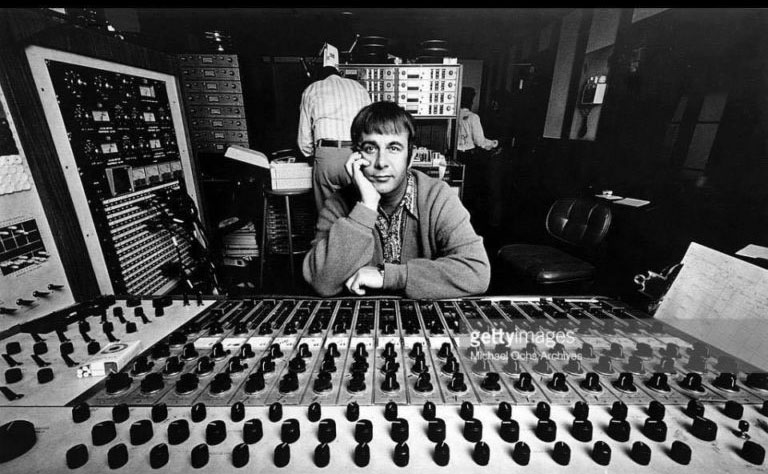
And when the Statlers recorded their final song—“Jesus Living Next to Me,” written by Don’s other son, Langdon, on June 15, 2001—it was “the last time we would look through the huge glass-divider and see Jerry Kennedy sitting by the soundboard giving us a smile and a thumbs-up sign,” Don wrote.
But that wasn’t the final time the group would work with Jerry. In 2003 the timing was right and the Statlers’ Farewell Concert was recorded on video. (Another solid DVD investment; never gets old.) Naturally, the audio supervising producer was Jerry Kennedy.
-30-
September 30, 2021
I’m the Official Historian on Jerry Glenn Kennedy
First ran in Sunday, Sept. 19 editions of The Times and The News-Star
No way do I expect today’s grown people to understand a little boy’s fascination in the late 1960s and onward with the dobro, Tammy Wynette, Tom T. Hall, Roger Miller, and The Statler Brothers.
But when you’re in a little Carolina tobacco farming town 44 miles from the interstate, a radio and those musician people sure came in handy. They’re still the soundtrack of a wonderful river of memory for me.
Was there any way I could have known who Shreveport’s Jerry Kennedy—guitar player, dobro picker, hit-record producer—was then? Neg. He was just beginning to understand it his ownself.
But fast-forward a half century to the current reason for sharing some Little Big News, big news because it’s little news that makes all the difference in our individual lives. It’s the little things that end up being the big things, things you hang on the wall.
A few months ago I read, as soon as I could get my greedy little hands on it, “The Music of The Statler Brothers: An Anthology,” by Don Reid. Don was a member of the Statlers, country music’s premier group for more than 40 years starting in the mid-’60s, an impressionable time for those my age back then, those like me now creeping, maybe racing, into our 60s.
I almost have to write about the Statlers every few years but think about the Statlers every few days. Study up and you’ll realize their career was divinely inspired. As was their unrehearsed hookup with Jerry Kennedy, who started picking in Shreveport under the watchful and caring eye and hands of the incomparable Tillman Franks, God rest his soul. Kennedy ended up in Nashville, and ended up producing more than 40 records for the Statlers.
With age and with the move to Louisiana, I figured out exactly who Jerry Kennedy was. You mean the guy who played the lead-in to “Stand By Your Man” by Tammy Wynette was Jerry Kennedy from Shreveport, and he got paid only scale? You mean the guy who said it might be a good idea to stack three guitars to start “Pretty Woman” was Jerry Kennedy? The guy who played dobro on “Harper Valley P.T.A.” was a guy who graduated from C.E. Byrd High? A guy who grew up on Huntington Avenue between Linwood and Southern? Come on. The guy who played dobro on “New York City” for the Statlers was the same guy who later produced all those hits for them?
“I used a weird pick for that one,” he said in August from his Nashville home on his 81st birthday, a few months after Reid’s book had been released. As he always does when talking of himself, he said it humbly, as if this thick pick were a gift from the music gods and all he did was hold it.
“That pick produced a strange sound,” he said. “Don’t know why I didn’t do it again and don’t know why I thought about doing it then. Wish I knew where that pick was.”
I tell you all this to make a point: before I read the book—highly recommended—I read the dedication. Here it is.
For allowing us artistic freedom,
For giving us the benefit of his amazing talent,
And for his undying friendship,
This chronicle of our music is dedicated to
Jerry Kennedy.
Love you, my friend.
The history of country’s best group, dedicated to the man who was the soul behind the sound. From experience, that’s as honest as old friends and old men can be.
The 414-page book is a recounting of every song the Statlers ever recorded. A labor of love. Don’t you wish your favorite group ever had released such a book? Mine did.
As he was writing it, Don would often call Jerry.
“Donnie always kept good notes,” Jerry said. “If other acts like this did that, we’d see better books like this written. Donnie was meticulous. While he was writing it, we’d talk three, four, five times a week, laughing our tails off, a few tears here and there. He’d have it all together and run it by me. I didn’t realize I’d played dobro on so many things. I apologize I guess…”
I’d hope not.
He didn’t know the book had been dedicated to him until Don called him from his Staunton, Virginia home. Jerry answered in Nashville. He’d gotten the package in the mail the day before but hadn’t opened the book yet. Don asked him to open it right then and read the dedication while he held on the line.
“It melted me,” Jerry said. “They could have chosen anybody in their family, anybody in the business. We’ve been special friends for a long time. There are very few situations when creative people get in a room together and come out still friends. But I never had anything but joy with them. We had the greatest relationship all those years and all those 40-something albums.”
“…for his undying friendship,
This chronicle of our music is dedicated to
Jerry Kennedy.
Love you, my friend.
When the hits have dried up and you can’t pick anymore, you hope this is what’s left. And that’s plenty.
With a tip of the cowboy hat to the Statlers and their hit “I’m the Official Historian on Shirley Jean Berrell,” we close with this. Though lame, it’s at least sentimentally honest:
“I’m the Official Historian on our friend Jerry Glenn
I’ve been a loyal fan of his since only God knows when,
He played the guitar, produced more hits than I can tell,
And he played the dobro just as well.”
The-e-e-e Ennnnnnnd.”
He’s bonafide, and we dedicate this effort to him. It’s not a book, but it’s something. Thank you, sir.
-30-