Simple Feed
June 19, 2018
Springer Caught Lightnin’ In The Bookmobile
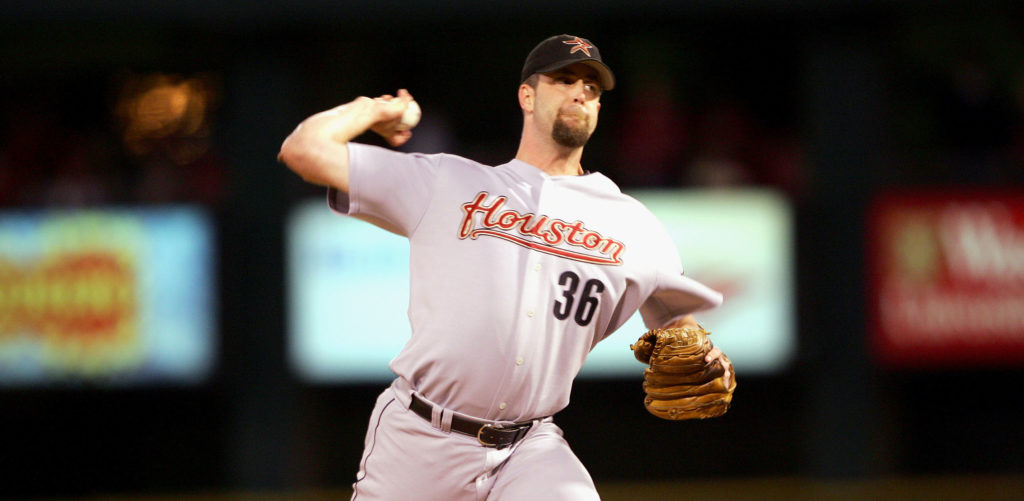
(DESIGNATED NOTE: The Class of 2018 will join the Louisiana Sports Hall of Fame at the annual Induction Ceremony Saturday, June 30, at 6:30 at the Natchitoches Special Events Center. The Weekend Celebration begins Thursday, June 28 — and you are invited! Go here to discover more:
https://www.eventbrite.com/e/2018-louisiana-sports-hall-of-fame-induction-dinner-ceremony-tickets-42888358234
Today, DW introduces you again to inductee Russ Springer, who spent 18 years on big-league mounds; from Louisiana, only Lee Smith has matched that. And it all started in…the bookmobile.)
THIRD IN A SERIES
By John Marcase, Designated Contributor
Written for the Louisiana Sports Writers Association
When Russ Springer meets a person, he can instantly tell where they are from.
If the person calls him “Russ,” well, they could be from anywhere.
If the person calls him “Russell,” they can be only from one place – Grant Parish.
As Russell Springer prepares to enter the Louisiana Sports Hall of Fame Saturday, June 30 in Natchitoches, he credits a former Cy Young Winner and Louisiana Sports Hall of Famer for helping him see what was possible far beyond the town of Pollock.
“Being from the rural part of Grant Parish to where even other kids in Grant Parish joked about where I lived … it’s hard to say I can make it being where I’m from, because I never knew anyone who did,” said Springer.
Springer’s outlook changed thanks to a visit from the Grant Parish Library’s bookmobile.
“I remember getting a book when I was kid,” Springer said. “It was ‘Ron Guidry – Louisiana Lightning.’ I read part of it … and it clicked. I never forgot it. This guy is from Lafayette, Louisiana. At the time, I didn’t even know where that was. But, in my mind, I knew it wasn’t too far from here. It doesn’t sound like a whole lot, but at the time it meant a whole lot to me.
“I knew that if he could make it, so could I.”
That Springer did. He pitched 18 seasons in the major leagues, matching Lee Smith for the most by any pitcher from Louisiana. Primarily a reliever, Springer appeared in 740 games, compiling a 36-45 record with a 4.52 ERA. Incredibly, his best years came in the latter stages of his career despite a devastating shoulder injury.
Over Springer’s final seven seasons after turning 35, he was 17-16 with a 3.46 ERA. He was a member of three World Series teams, including Arizona’s championship team in 2001, and the first Houston team to appear in a World Series (2005).
“To last 18 years in the big leagues takes talent for one thing,” said Ben McDonald, a 2010 Louisiana Sports Hall of Fame inductee. “And you have to be fortunate with injuries. A lot of guys get out because of injuries, and I was one. You’ve got to be mentally tough … It takes a lot of dedication. I know he had an incredible career.”
Springer and McDonald arrived at LSU in the fall of 1986, but in differing fashion. McDonald came to LSU on a basketball scholarship, and was drafted by the Braves out of high school.
Springer also played basketball and baseball in high school at Grant High School, but it took some good fortune to be discovered.
One summer morning as his mother Diane was driving Springer and his siblings – brother James and sisters Jamie and Jana – to an aunt’s apartment in Alexandria to go swimming, they passed by a major league tryout camp being held at Bringhurst Field. Springer got his mother to drop him off.
“Here I come in, 6-3, 160 pounds with cutoff blue jeans and hair down to my neck and looking like Tom Sawyer,” joked Springer.
Springer made his way to the third base bullpen where the pitchers were working. He found the scout in charge and asked to pitch.
“He looked at me and smirked and said why don’t you stand by the fence. When everybody else is done, I’ll let you throw a couple,” Springer recalled.
After the registered pitchers finished, the scout dismissed the catcher and guy holding the radar gun. Springer reminded the scout of his promise.
“He rolled his eyes and said OK,” said Springer.
It took less than six pitches for the scout to recall the radar gun.
“The radar guy came back and I was throwing 94 miles an hour on a side mound with cutoff blue jeans at 16 years old,” said Springer. “Next thing you know, I’m getting scouts at my games.”
Springer played three seasons for LSU. As a freshman, he set a then-SEC record for strikeouts per nine innings at 14.5. As a junior, he and McDonald helped lead LSU to the College World Series, where Springer earned a win as the starting pitcher and McDonald the save against Miami.
Springer credits teammates Mark Guthrie, Stan Loewer and Barry Manuel, among others, for helping him adjust to college life. He credits McDonald for pushing him to be the best he could be.
“We had a healthy competition and pushed each other,” said Springer. “It didn’t matter if we were running or pitching or whatever.”
“It was a match made in heaven,” said McDonald. “We were two very competitive people. If he struck out eight one night, I wanted to strike out nine the next.”
Springer was drafted by the Yankees in the seventh round in 1989. Despite making just three starts above A ball, the Yankees called him up to the major leagues in 1992.
A starting pitcher his entire career, the Yankees used Springer out of the bullpen. During the offseason, he was traded to the Angels as part of the Jim Abbott deal.
For the next four seasons he bounced between being a starting pitcher and a reliever. After being traded to Philadelphia, Springer had had enough.
“I told them I can’t do both and be good at either one of them,” said Springer.
The Phillies told Springer to decide on which he’d rather do.
“I think they 100 percent thought I was going to be a starter,” he said. “I said the hardest thing for me was to sit those four days between my starts. From the time I told them I wanted to be a reliever, I never started a game the rest of my career.”
Springer’s career bounced him all over the country. He tried to pick franchises near his home. When he first became a free agent, he jumped at the chance to pitch in Houston, a 4½-hour drive from Pollock.
In 2000, Arizona offered a multi-year contract in a warm climate and with a contending team. However, shortly into his second year (2001) with the Diamondbacks, Springer knew something was wrong.
“All of a sudden, my shoulder is killing me,” he said. “I have what I consider a high pain tolerance because of the different injuries you go through as a professional athlete. It was hurting to the point where I couldn’t keep my shoulder in socket. I’d throw a baseball and my shoulder would come out of socket.”
Springer had an MRI and a visit with one of the premier orthopedic surgeons in the country. After looking at the test results, he told Springer, “If I open you up and see what I see on this MRI, I’m not even gonna fix it. I’m just gonna close you up and tell you to have a nice life, you’re done.”
It wasn’t what Springer wanted to hear so he left and consulted with an Arizona doctor who told him he would fix whatever he found wrong. However, the surgeon could not guarantee he would ever pitch again.
“I said, ‘That’s all I ask. Just fix what you find,’” Springer said.
When Springer woke up from surgery, the surgeon listed everything he had fixed: torn rotator cuff, torn labrum, tightened up the shoulder capsule, removed the bursa sac and shaved the acromion bone.
Springer spent the following year in Central Louisiana rehabbing. Six months after surgery, he began playing catch. A few months later, Springer called his agent to find work, but not in the majors. Springer wanted to go to Puerto Rico.
“Everybody knows what kind of injury I just came off of,” he said. “I’ve seen those guys come into camp and they really don’t take them that seriously.”
Springer wound up as the closer for a team. One of the opposing managers was St. Louis coach Jose Oquendo.
“The next thing you know, I have the Cardinals call and offer me a legit spot on their team,” he said.
But the next season, Springer would not attend spring training, instead focusing on his family following his son Jake’s Autism diagnosis. After things settled at home, Springer’s wife Kelly told him to go back to work. Russ Springer told his agent he would only pitch for Houston.
The Astros signed Springer and called him up in time to help the Astros win 36 of their final 46 games to earn the NL Wild Card. Springer had a 2.63 ERA in 16 games, and the Houston franchise won its first postseason series. A year later, Springer and Houston found themselves in the World Series.
Springer retired after appearing in two games for the Reds in 2010 due to injury.
“I’d come back and pitched nine years after the doctor told me I’d never pitch again,” he said.
Springer said a key to his longevity came from emulating his father James’ work ethic.
The other reason he was able to last nearly two decades in the major leagues? Kelly Springer.
“She was my high school cheerleader and was always there for me and wanted me to pursue my dreams,” said Russ. “She never got caught up in the major league lifestyle. Once we started having kids, she was an awesome mom to Karlee and Jake. The way she dealt with my son at an early age when we knew he had issues … she would never cut into my time of going to the gym or playing ball. She handled it.”
As his induction to the Louisiana Sports Hall of Fame nears, Springer has found himself looking back over his career and taking joy in things not found in box scores.
“I was able to hold games, pitching in relief, behind some guys who are in the Hall of Fame right now – Greg Maddux, John Smoltz, Randy Johnson, Tom Glavine,” he said. “The highlight of my career basically was grinding out a career and playing in some big games, but unless you are there, you don’t realize how hard it is to get there, and how hard it is to stay there.
“To play as long as I did is something I’m proud of.”
“It hasn’t been easy. But it’s been awesome!”
-30-
(Joining Springer in the 2018 induction class: six-time Pro Bowl receiver Reggie Wayne; NBA champion and two-time Grambling All-American Larry Wright; 15-year NFL receiver and two-time Super Bowl champion Brandon Stokley; championship coaches Lewis Cook (high school football, still active at Notre Dame of Crowley) and Jerry Simmons (LSU, UL Lafayette tennis); 1975 Bassmasters Classic champion Jack Hains; international Drag Racing Hall of Famer the late Paul Candies; winners of the Distinguished Service Award in Sports Journalism, Pineville-based broadcaster Lyn Rollins and Lake Charles sportswriter Scooter Hobbs; and New Orleans Saints favorite Steve Gleason, who will receive the Dave Dixon Sports Leadership Award.)
June 19, 2018
‘Brandon, Uh, First Time Caller Here…’
(DESIGNATED NOTE: The Class of 2018 will join the Louisiana Sports Hall of Fame at the annual Induction Ceremony Saturday, June 30, at 6:30 at the Natchitoches Special Events Center. The Weekend Celebration begins Thursday, June 28 — and you are invited! Go here to discover more:
https://www.eventbrite.com/e/2018-louisiana-sports-hall-of-fame-induction-dinner-ceremony-tickets-42888358234
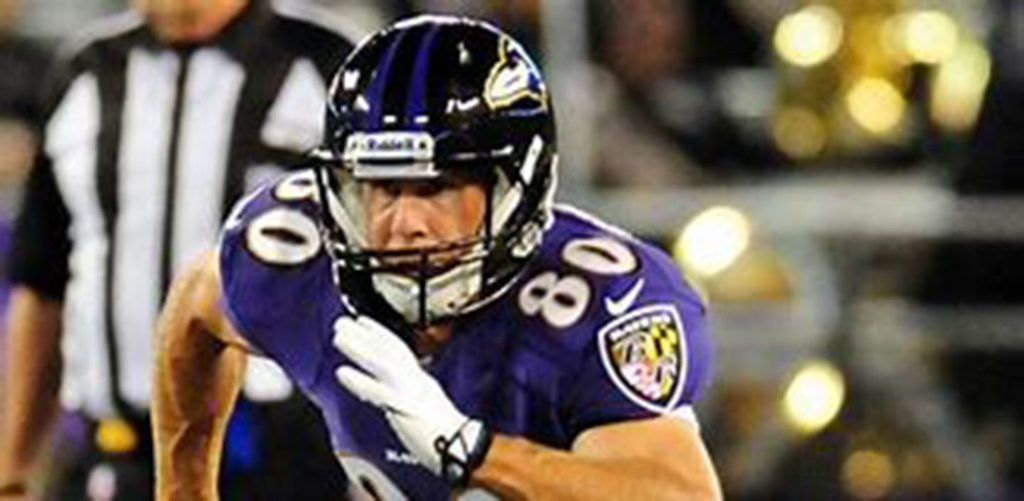
Today, DW introduces you to inductee Brandon Stokley, a record-breaking receiver at Comeaux High and Louisiana-Lafayette and a 15-year NFL vet and two-time Super Bowl Champion because of toughness, tenacity, and talent.)
SECOND IN A SERIES
By Dan McDonald, Designated Contributor
Written for the Louisiana Sportswriters Association
Hundreds of athletes and prominent sports figures have been enshrined in the Louisiana Sports Hall of Fame in its 60 years of existence.
None of them found out about their upcoming induction in the manner than Brandon Stokley did. But that shouldn’t be a surprise, since normal and typical have never been terms associated with one of the top receivers in Louisiana history.
That word on his 2018 induction came last September while Stokley was on-air, taking care of normal business on his weekday radio show on Denver’s 104.3 The Fan along with co-host Zach Bye. It was after two hours of the normal noon-3 p.m. broadcast that Stokley’s former coach and long-time friend Gerald Broussard walked into the studio, grabbed a microphone and told Stokley that his next on-air call was going to be a little different.
That call came from Hall of Fame chairman Doug Ireland, informing Stokley of his selection by the 30-member Hall of Fame committee. Two other Lafayette-based committee members followed up with on-air chats, and the next hour was filled with calls from colleagues such as college teammate and fellow NFL veteran and Hall of Famer Jake Delhomme, fellow 2018 inductee Reggie Wayne, and future Hall of Famer Peyton Manning among others.
“I didn’t quite know what was happening for a while,” Stokley said. “It kind of came out of the blue. It wasn’t anything I ever expected.”
Wife Lana also walked into the studio that day with sons Carson and Cameron, and she had also arranged for Stokley’s beloved grandfather Causby Hamic to be a part of the celebration by phone from his Crowley home. The radio station then honored Stokley with a reception after he wrapped up one of his most memorable shows – one that is still available on YouTube.
That day became even more poignant when Hamic passed away at age 96 last January. Stokley had previously lost his mother Jane during his senior year at then-Southwestern Louisiana in 1988, and his father, long-time Ragin’ Cajun head football coach Nelson Stokley, in 2010 from complications of Alzheimer’s disease.
“Just the way it all came together made it special,” Stokley said. “With everyone that called in, my family there, it was a special, special day. It’s a memorable day to begin with, to think that someone considers you to be among the many great athletes and sports figures that have come out of Louisiana, but the way I found out made it even more special.”
While normal and typical may never have been used in descriptions, the word “special” keeps popping up any time someone who knows him talks about the man who has been the underdog all his life.
“There are some that I would have gone to see and tell about that kind of honor,” said Broussard, who flew from Lafayette to Denver to break the news. “For him, I would have gone anywhere.”
Broussard and many more Stokley admirers will be at the Natchitoches Events Center on Saturday evening, June 30, to see the induction ceremony for the Hall of Fame’s Class of 2018.
Broussard was an assistant coach under Stokley’s father for many years with the Ragin’ Cajuns, and coached wide receivers for part of that time when Stokley was on his way to becoming the most prolific receiver in Cajun history.
“Athletically, he was gifted when it came to quickness,” Broussard said, “but it’s the other part. He was just tough, mentally and physically. He never checked up as far as blocking somebody or getting up after a hit, and I never saw him short-arm a ball in his life. The mentality to go across the middle, that’s not something that most people have.
“He played his whole life that way, knowing he was going to get hit, and he didn’t care. He just went up and got the football. It takes a special person to do that, knowing the collisions you’re going to take.”
Those collisions were frequent given Stokley’s style of play, leading to more than his share of injuries during both his collegiate and professional career. One of those came in the fourth game of his junior season at USL, when he suffered a torn ACL against Texas A&M and missed the remainder of the season.
Stokley had only 20 catches for 248 yards and one score in that shortened season, one that left him with doubts about his football future after college.
“You kind of dream about being able to do that,” Stokley said of the NFL, “and I started thinking about that going into my junior year. At the same time, it’s the NFL. For me, it was ‘can I really play and do it at that level,’ a different level than what I was playing at, so I was never quite sure. I didn’t know how NFL scouts and the front office folks viewed me.
“After I got hurt, at that time it wasn’t a foregone conclusion that you come back from an ACL injury like it is now. Back then, it was ‘will I ever be the same’ and ‘can I come back from that.’ A lot was up in the air, whether I could be the same player or not. There were some serious doubts.”
But Stokley had an ace in the hole on that front.
His future wife was also in the middle of a stellar athletic career of her own. Lana Jimenez was a two-time All-America outfielder for the renowned Ragin’ Cajun softball program and helped lead her team to two Women’s College World Series appearances. Those came on either side of her own serious knee injury.
“When you have that type injury it can wear on you,” Stokley said. “You’re grinding and you don’t see progress. But when you have somebody that has been through that process before, it helps you stay positive. Lana was a big part of me recovering, both then and later on. She played at a high level, and had to go through a knee injury. There’s nothing like sports and the adversity you face when that happens, and when your partner has been there and done that, they know what you’re going through.”
By that time, Stokley had produced two stellar seasons after redshirting in 1994, setting NCAA records for most receptions (75) and receiving yards (1,121) by a freshman in 1995. Those marks stood for years before Texas Tech’s Michael Crabtree broke them, but Crabtree had an advantage – he was a starter.
Even with those gaudy numbers, Stokley didn’t start in his first year. Father Nelson, the second-winningest coach in Cajun history with 62 victories, made sure there were no claims of preferential treatment for his son.
“Being the son of a coach, that’s not easy,” Broussard said. “He had to overcome that every day. People may have thought he was playing because he’s the coach’s kid and wondered did he deserve balls thrown to him. He overcame all of that and never said a word, but I heard it from others. I didn’t have to defend him because he defended it by his play. I used to tell people, just watch him, he’s the best player we got.”
Stokley did come back with a standout senior year, notable for a 181-yard, three-TD game against Tulane only days after his mother’s death. Suddenly, the career underdog – he played only one year of high school football, when he led all Louisiana receivers with 80 catches for Comeaux High – was on his way to the NFL as a fourth-round draft pick by the Baltimore Ravens in 1999.
Ending his rookie season, he caught a 38-yard touchdown pass from Trent Dilfer for the first score in Super Bowl XXXV to spark a 34-7 win. It was the start of what became a memorable career.
“Just to be able to get there, in my first year, and then have an impact, that was great,” he said.
His best pro years came later after joining the Indianapolis Colts and long-time friend Manning in 2003. One year later, he caught 68 passes for 1,077 yards and 10 scores including Manning’s then-record 49th touchdown pass, as part of the Colts’ record-setting passing attack.
“Brandon is one of my favorite teammates of all time, along with being a close friend,” said Manning, who called Stokley the best slot receiver in the NFL during his stint with the Colts. “For him to keep that desire and that quickness as long as he did, that’s pretty rare for a wide receiver. He was definitely a matchup problem for teams.”
An injury sidelined Stokley for most of the Colts’ Super Bowl XLI winning season in 2006, and the following year he left for Denver – the city that became his permanent home even after stints with the Seattle Seahawks and New York Giants. The last of those came in 2011 when he suffered a torn quadriceps after only two games, and figured his NFL playing days were done.
That was before a February 2012 phone call from Manning, inviting him to join him for some throw-and-catch during Manning’s injury rehabilitation. A few weeks later, Manning slept in the guest room at Stokley’s house while visiting Denver in his free-agency tour. Stokley had no intentions of playing again, but he recruited his friend to join the Broncos.
“I never thought I would be part of the deal. I never asked him for that,” Stokley said. “That’s not why I wanted him to come to Denver. I wanted him to come because I love watching him play and I wanted my sons to go to games and watch Peyton Manning play.”
The Broncos needed a slot receiver, as well as someone to help guide a young receiver corps, and the club didn’t even need to relocate anyone. Stokley wound up catching 45 passes for 544 yards and five scores that year, becoming one of only eight players in NFL history to record 40 catches and five touchdowns in a season after age 35. His last career TD catch came in a playoff game against the Ravens that year – a typical leaping, toe-tap, fingertip grab.
Coincidentally, and fittingly, Stokley went to back to his first club, the Ravens, for one final season in 2013 before announcing his retirement in November of that year.
“I never wanted to fail, that’s what drove me,” Stokley said. “I never wanted to lose, even in practice one-on-ones. I never felt like I’d arrived, and I always felt like I had to get better, that I always had to prove I was good enough.”
It was plenty good enough.
-30-
Joining Stokley in the 2018 induction class: six-time Pro Bowl receiver Reggie Wayne; 18-year Major League Baseball pitcher Russ Springer; NBA champion and two-time Grambling All-American Larry Wright; championship coaches Lewis Cook (high school football, still active at Notre Dame of Crowley) and Jerry Simmons (LSU, UL Lafayette tennis); 1975 Bassmasters Classic champion Jack Hains; international Drag Racing Hall of Famer the late Paul Candies; winners of the Distinguished Service Award in Sports Journalism, Pineville-based broadcaster Lyn Rollins and Lake Charles sportswriter Scooter Hobbs, and former New Orleans Saint Steve Gleason, winner of the Dave Dixon Sports Leadership Award.)