Simple Feed
June 19, 2018
The Wright Stuff
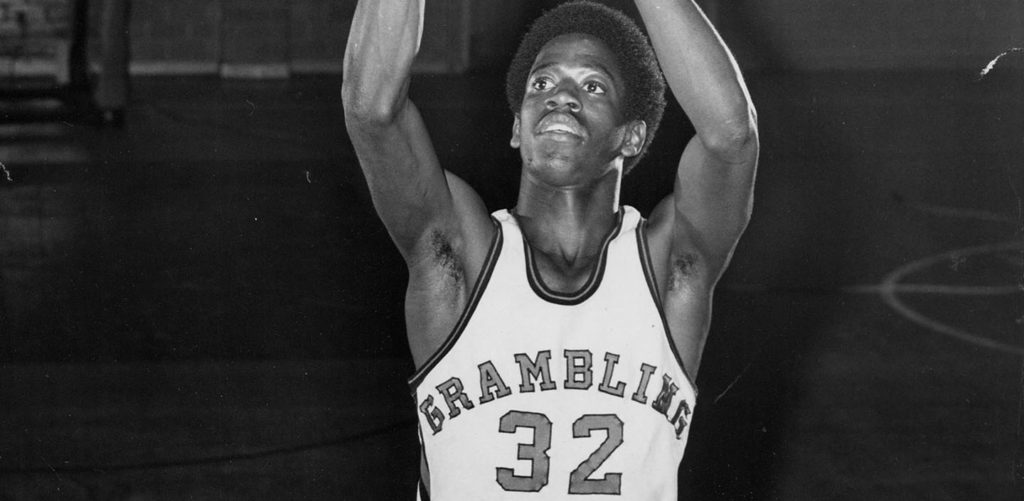
(DESIGNATED NOTE: The Class of 2018 will join the Louisiana Sports Hall of Fame at the annual Induction Ceremony Saturday, June 30, at 6:30 at the Natchitoches Special Events Center. The Weekend Celebration begins Thursday, June 28 — and you are invited! Go here to discover more:
https://www.eventbrite.com/e/2018-louisiana-sports-hall-of-fame-induction-dinner-ceremony-tickets-42888358234
Today, DW introduces you again to inductee Larry Wright, an NBA champion and two-time Grambling All-American.)
FIFTH IN A SERIES
By Paul Letlow, Designated Contributor
Written for the Louisiana Sports Writers Association
Larry Wright’s epic basketball journeys always seemed to reach the same destination.
No matter where he played, from Richwood High School to Grambling and into professional ball, Wright was always part of teams that won big.
“Winning has always been number one for me since I can remember starting to play at an early age,” Wright said. “Even as a small kid going to the rec center, winning was always the number one deal with me.”
Wright was a two-time Parade Magazine All-American at Richwood and won a Class 3A state championship in 1972. He transferred to Western High School in Washington D.C. as a senior and his team won the city championship. Grambling won the 1976 SWAC tournament championship with Wright starring as the conference player of the year.
Drafted in the first round by the Washington Bullets in 1976, Wright joined the franchise that won the NBA championship in 1978.
Wright finished his playing days as an international star, delivering a European Championship for Italy’s Banco DiRoma in 1983-84.
For all of his accomplishments, Wright has finally earned induction into the Louisiana Sports Hall of Fame as part of the Class of 2018. He and 10 others will be enshrined at the annual induction dinner and ceremony at the Natchitoches Events Center on Saturday, June 30.
“He’s had a storybook life,” said son-in-law Damon West, who is head coach at Rayville High School. “You’ve just have to put the pieces together.”
Important people along the way shared Wright’s story, starting with his mother Recie Hollis. He watched as she worked multiple jobs to provide for her family. Larry Wright was the sixth of nine children.
“I wanted to do my best to be a winner,” Wright said. “It comes from seeing my mother raise nine kids by herself. Seeing her get up going to work every day and never complain about anything. She always told us that if we were going to do something, do it your very best.
“She never allowed us to come home and complain about anything. I think I get that from Mother. Watching my older brothers play football at the powerhouse, Richwood High School. I used to go to practice with them and watch them. I went to games and watched football games. Once upon a time, Richwood won 66 in a row under the legendary Mackie Freeze.”
At Richwood, another important figure entered his life. Hershell West, the man who would become his high school coach and mentor, spotted Wright in the gym when he was in junior high.
“I first saw him as an eighth grader,” West said. “He was a small player but a competitor. He was just a winner.”
Wright said West encouraged him to pursue excellence in basketball in a way no one ever had before.
“Nobody ever showed interest in me the way he did,” Wright said. “He saw me play and he said to me that if worked at it, I could end up going to college on scholarship.”
West, who had been a great player himself at Grambling, told Wright that he had a future in basketball if he would put in the work.
“Nobody had ever said anything that encouraging to me,” Wright said. “After he said he said that to me, I’d make a daily visit to his class so he could talk to me about the game of basketball. I was like a sponge. Whatever he said, I would listen at it.”
Wright became vocal about his goals, which included earning a college scholarship and reaching the NBA.
“I remember one day in ninth grade, I told him I’d make it to the NBA,” Wright said. “He said if I believed it, I could do it. Never from that day until I went to the NBA did I put a basketball down.”
Wright suffered a broken arm in 10th grade and Richwood lost in the playoffs but he came back with a vengeance in his junior year as he averaged 28.9 points per game. At Richwood, Wright paired with Louisiana Sports Hall of Famer Sammie White in a dynamic backcourt. White went on to play wide receiver for the Minnesota Vikings in the NFL.
“I still believe to this day, we were the best pair of guards to play in the backcourt in north Louisiana history and probably in state of Louisiana,” Wright said. “In 1972 we won the state championship. I think we were 35-1.
“We lost one game and it was on a controversial call where one guy called the basket good and the other guy called it no good, to Jonesboro in Jonesboro. Never forget, we were all in the dressing room with our heads down crying. Hershell said, ‘We’ll get them again at the end of the year.’ We got ’em again and made good. We went on to Alexandria and no game was close.”
When Wright learned that he wouldn’t be eligible to play a full senior season at Richwood because he was turning 18 in November, West arranged for him to move to Washington to play for future Grambling athletics director Robert Piper at Western High. West and Piper were close friends and former teammates at Eula Britton High in Rayville and at Grambling.
“They ruled against me and said I’d only be able to play the first semester in high school,” Wright said. “Again Hershell West stepped in and called Robert Piper. It wasn’t a semester situation. It was an age situation.”
Another Louisiana Hall of Famer, Grambling football legend Ernie Ladd, put Wright on a plane to Washington as he left the state of Louisiana for the first time in his life.
“I stayed with Mr. Piper and we won the inner city championship in Washington D.C.,” Wright said. “I left Richwood where I made All-American and went to Washington D.C. where I also made All-American.”
Grambling’s legendary coach Fred Hobdy promised Wright a scholarship when he was in10th grade and that offer stood two years later. Wright, who wanted to follow in the footsteps of West and Piper, turned down other college opportunities to play for the Tigers.
“I could have gone to any school in the country,” Wright said. “But Mr. West went to Grambling, so I wanted to go to Grambling.”
Wright enjoyed three great years at Grambling and was two-time selection to the NCAA all-small colleges team. Wright was the SWAC Player of the Year as a junior with a 25.4 scoring average for the Tigers’ SWAC Tournament championship team.
“He was very unique,” Wright said of Hobdy. “You go to Grambling, you’ve got to go to class and get an education. Basketball was secondary. The second thing that was unique about him is that he was an outstanding fundamental coach. He got you ready for every aspect or facet of the game.”
Wright declared for the NBA Draft as a hardship case and was a first-round pick at 14th overall by Washington.
“Larry is one of the best small players I ever scouted,” general manager Bob Ferry noted in the 1977-78 Bullets media guide.
Describing Wright’s style in their 1977-78 preseason scouting report, the Bullets noted: “He loves to play, isn’t afraid of anything. Best example of his fearlessness. He saw Boston Garden for the first time on Nov. 5. It was the Celtics first home game, they passed out championship rings, raised all the flags. Larry came off the bench, scored 23 points, including six for six from the foul line in the final 28 seconds.”
In just his second pro season, Wright teamed with 1988 LSHOF inductee Elvin Hayes on the Washington Bullets’ 1978 NBA Champion squad.
“Larry and I accomplished one of the great accomplishments in sports,” Hayes said. “We were with the Washington Bullets and had a great team. Larry was a part of our championship.”
Hayes, another Rayville native, had crossed paths with Wright before.
“I met him one time when I was in high school at Richwood,” Wright said. “He was with the San Diego Rockets. Coach West brought him to Richwood. He played against us and talked to us about being a player. It’s unreal the way it happened. One day I would win a championship with Elvin Hayes.”
Wright and the Bullets battled through the playoffs.
“We were down to the San Antonio Spurs three games to one,” said Wright who celebrated the 40th anniversary of their championship with a reunion back in Washington in 2018. “I’ll never forget, Dick Motta made the statement that ‘the opera’s not over until the fat lady sings.’ We heard him when he said it. We knew we were a good team. We came back and eventually won the whole thing.”
In four seasons with the Bullets, he scored 2,489 regular-season points in 297 games (8.4 points a game), averaging between 9.3 and 7.3 points a game each season.
After playing six seasons in the NBA with the Bullets and Detroit Pistons, then spending a year away from basketball teaching in Monroe, Wright had a chance to return to the court in Europe.
The Italian team Banco DiRoma wanted an American player who could help them take down the team led by star Mike D’Antoni, now head coach of the Houston Rockets.
“Larry was an offensive guard, a natural born scorer, a fighter,” Italian coach Valerio Bianchini said in a 2013 interview with Euroleague.net. “He was not a pure point guard, but a mix of point and shooting guard and that only made his potential higher. His fighting character came from his difficult childhood, marked by family poverty. He was a very responsible man and he always cared a lot for his family and helped them a lot.”
Wright delivered as promised as he led Banco DiRoma to the Italian championship in 1982-83, winning Italian Player of the Year honors in 1983. One publication named him the European Player of the Year in 1983-84 when he led the team to the European title. He became such a star in Italy, he had his own signature shoe line by Diadora.
“It was really something that as a boy growing up in Louisiana, I never thought about the opportunity to go to college on a basketball scholarship, then get drafted in the first round of the NBA, win a world championship, then go to Rome Italy and win a championship where they hadn’t won in 40 years.”
After ending his playing days, Wright would work as an NBA scout, then return to Grambling as head coach before becoming a high school administrator.
Though those years, he won in his role as a father too. Wright’s family had the right stuff when it came to sports.
Son Larry Jr., played for West Monroe High School’s first state championship team, signed with Notre Dame in football and finished at Louisiana Tech. Daughter Ashana won four straight conference championships playing for Grambling in basketball and son Lance played football for the Tigers. Daughter Imani Wright starred at Florida State and was a WNBA draft pick earlier this year.
“I’ve got the greatest kids,” Wright said. “Some special kids.”
In a wonderful new chapter to his story, Rayville High School, where Wright serves as an assistant principal, went undefeated in 2017-18 and won a state championship. The Hornets are coached by Damon West, Hershell’s nephew and Wright’s son-in-law. West employed the same up-tempo attack at Rayville that Hershell West and Hobdy ran when they were coaching.
“He’s played the game on every level and won on every level,” Damon West said. “There are a lot of things we talk about and he’s been through it. That’s been a real plus for me.”
For Wright, his Rayville connection just brought everything full circle — in the same year he enters the Louisiana Sports Hall of Fame.
“All the people responsible for me being who I am were people from Rayville,” Wright said. “When I was offered the job as social principal at Rayville High School, it was a no-brainer. It came full circle. People like Hershell West and Robert Piper put me under their wings and helped me become the man I am today. I wanted to come to Rayville to see if I could help somebody.”
-30-
(Joining Wright in the 2018 induction class: 15-year NFL receiver Brandon Stokley; 18-year Major League Baseball pitcher Russ Springer; star University of Miami receiver Reggie Wayne of New Orleans, who’ll join the Indy Colts Ring of Honor in November; championship coaches Lewis Cook (high school football, still active at Notre Dame of Crowley) and Jerry Simmons (LSU, UL Lafayette tennis); 1975 Bassmasters Classic champion Jack Hains; international Drag Racing Hall of Famer the late Paul Candies; winners of the Distinguished Service Award in Sports Journalism, Pineville-based broadcaster Lyn Rollins and Lake Charles sportswriter Scooter Hobbs, and former New Orleans Saint Steve Gleason, winner of the Dave Dixon Sports Leadership Award.)
June 19, 2018
Reggie Wayne: Nice Catch By The Hall
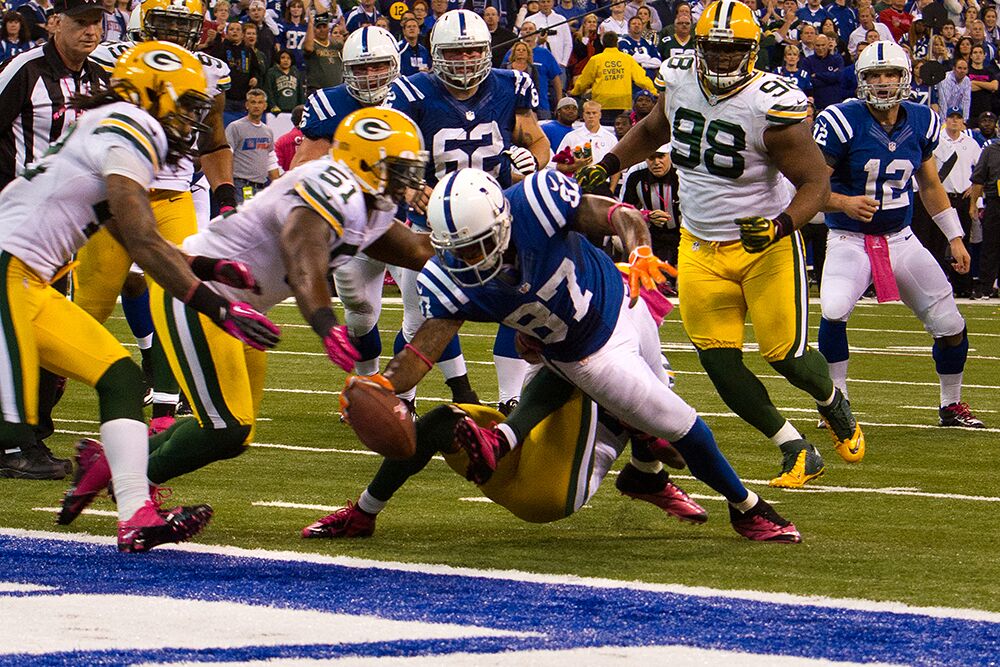
(DESIGNATED NOTE: The Class of 2018 will join the Louisiana Sports Hall of Fame at the annual Induction Ceremony Saturday, June 30, at 6:30 at the Natchitoches Special Events Center. The Weekend Celebration begins Thursday, June 28 — and you are invited! Go here to discover more:
https://www.eventbrite.com/e/2018-louisiana-sports-hall-of-fame-induction-dinner-ceremony-tickets-42888358234
Today, DW introduces you to inductee Reggie Wayne, whose brilliant receiving career has led him into University of Miami Hall of Fame and, come November, into the Colts Ring of Honor, and all because he was a better wide receiver than he was a shortstop. At least, we think he was…)
FOURTH IN A SERIES
By Joel Erickson, Designated Contributor
Written for the Louisiana Sports Writers Association
Reggie Wayne left such an indelible mark on his teams that it’s hard to imagine him playing for anybody else.
For example, when Ed Reed thinks about the first time he met Wayne, he thinks about heading home from his own high school football games, flipping on Friday Night Football and marveling at the John Ehret receiver who seemed to create his own highlight package every week.
When he went to Miami, Wayne was the main target on the Hurricanes teams that lifted an iconic program out of the hell of NCAA probation and set up a national championship run.
And in Indianapolis, Wayne became a key piece in a Peyton Manning-led passing game that redefined offense in the NFL, then stuck around for 14 years, the rare NFL player to spend his entire career with only one team.
Funny to think how close the silky-smooth receiver with the flytrap hands came to cementing his legacy in other locales, instead of the places that led to this year’s induction in the Louisiana Sports Hall of Fame on Saturday, June 30 in Natchitoches.
“I don’t think there’s any athlete who doesn’t want to feel appreciated or respected,” Wayne said. ‘There’s been so many greats that have come out of the state of Louisiana. Just to be a part of that, it’s an honor.”
Wayne’s bloodlines seemed primed for football. His father, Ralph, played linebacker for Grambling in college, then spent his career as a football coach at O. Perry Walker in Algiers.
But the sport that first captured Wayne’s heart wasn’t his father’s.
“Football just wasn’t my thing,” Wayne said. “I grew up watching Ozzie Smith and the Cardinals. I wanted to play shortstop ever since I was small.”
Wayne grew up playing shortstop and third base, at least until football got its hooks into him when he got to high school and saw the bright lights and the passionate fan base that followed John Ehret football.
Every once in a while, though, he wonders what might have been.
“I don’t have any regrets in my life,” Wayne said. “I don’t, but if there was one that I can take out, it’d just be, where would I be baseball-wise these days? Because I thought I was fairly decent.”
Obviously gifted, Wayne joined a John Ehret team that initially wasn’t suited to his talents. When he started playing football in high school, he was a running back and quarterback, trapped in an option offense. He spent his first two years of football on the perimeter, mostly blocking.
Wayne started to wonder if he should leave John Ehret.
“I was kind of like, ‘You know, I can go to O. Perry Walker where my dad’s at, and they throw the ball every play,’” Wayne said. “They’re three and four wides every play. I kind of kept it to myself and told some friends that I was debating on doing it, and a couple of those friends went to the coach and told him there was a possibility that I was going to leave.”
The ball came to Wayne so many times the next week that he remembers telling his coaches to back off just a bit.
And when the ball started coming Wayne’s way, so did the schools. Recruits are allowed to take five official visits; Wayne took three, in part because some of the biggest schools in the SEC didn’t realize what they had on their hands. Tennessee pulled his offer right before he visited, telling Wayne they’d given it to another receiver; Florida told him the Gators didn’t think he was fast enough. Another visit was a courtesy to a former coach at Oklahoma State.
For a little while, Wayne was committed to LSU, at least until he got a call from Miami wide receivers coach Curtis Johnson.
“I’d never thought about Miami; they were on probation at the time,” Wayne said. “I pretty much had my mind made up, and he was like, ‘Give me a shot. Just one chance.’”
How Johnson convinced Wayne is up for debate. Now back in his second stint as the Saints’ receivers coach, Johnson is pretty sure he sealed the deal by offering Wayne some pointers on a post-corner over the phone, pointers that led to a touchdown the next week.
Reed also remembers Johnson putting the two prized recruits together in the car on a long drive and letting them build a relationship that carried weight when they took a visit to LSU together, and Wayne could tell Reed wasn’t feeling his state school.
Wayne has a different explanation.
“It was a big family,” Wayne said. “I saw something I didn’t see at LSU or Oklahoma State.”
Wayne went to Miami, roomed with Reed and instantly made a mark on the program.
“He was on a mission,” Reed said. “His first year was all his doing. All his will. All his goals for himself were to be the best receiver, make all the catches, every last one of them that came his way.”
Wayne caught 48 passes as a freshman, breaking Michael Irvin’s record for catches as a freshman. From that season forward, Wayne was a devastating target, a player who had a knack for coming up with catches in big games and still holds Miami’s record for receptions in a career, with 173 over four seasons.
The best part was that Wayne got to cap his career with three catches for 49 yards at home in a 37-20 Sugar Bowl win over Florida, the team that told him he was too slow.
“In 35 years of coaching, best hands I ever had,” Johnson said. “If you watch some of the catches he made, some of the plays he made against the Florida States, teams like that. … Whoever we played against, this guy made plays.”
Indianapolis drafted Wayne with the 30th pick of the first round in 2001. In hindsight, he couldn’t have landed in a better spot. At the time, though, Wayne wasn’t sure that was the case.
“I knew about Peyton and all that stuff, but when I got there, they’d really only had one winning season,” Wayne said. “I didn’t know anything about the Midwest. … And also, you know, my rookie year, I had Jim Mora as my head coach. … He didn’t even want an offensive dude, he wanted a defensive guy, and they went and drafted me, so I had to get used to all of that.”
But Wayne fit with the Colts better than anybody could have known. Manning was already establishing his legendary work ethic, Marvin Harrison had the same personality, and the Colts added a receiver who was ready to get right in there with them.
“There was no secret why he was as great as he was,” Colts teammate Brandon Stokely said. “It’s because of the way he worked. He didn’t come into the NFL his rookie year and have a superstar season, but he worked his way to becoming a great NFL receiver.’
Wayne caught 27 passes as a rookie, 49 in his second, 68 in his third, broke through with a 77-catch, 1,210-yard campaign in his fourth season and never looked back. From that moment on, he was one of the most devastating weapons in a Manning-led offense that dominated the NFL.
Being drafted to Indianapolis ended up giving Wayne a third home to go along with the New Orleans area and Miami. Wayne spent most of his 14 seasons with the Colts playing for the same quarterback, the same coach, in the same offensive scheme. Off the field, he had time to build relationships and sustain them, eliminating off-the-field concerns and racking up numbers as he chased the game’s ultimate goal, a Super Bowl prize Indianapolis picked up in Super Bowl XLI.
“Once you’ve got it, it was all good from that point on,” Wayne said. “I loved everything about it. I think we all did. There was no team in the decade that won more games than us. That was a testimony to all the work we put in. Now, we damn sure don’t have enough rings to show for it, but we do know we were a pretty good group.”
Along the way, Wayne established himself as one of the best receivers in the NFL.
While his old Miami roommate built a career as one of the best safeties the NFL has ever seen, he relished his meetings with Wayne, a player he always knew was destined for stardom at the game’s highest level.
“Reggie was really ready for the pros, he was ready for it in college,” Reed said. “His precision route-running, his mentality of knowing the game, knowing what was going on, being able to communicate with his other receivers and his quarterback, his mind for the game was on a whole ’nother level.”
Wayne, who retired after 14 seasons, 1,070 catches, 14,345 yards and 82 touchdowns, is still around the game. An analyst for the NFL Network, Wayne has also dipped his toe into following in his father’s footsteps as a coach, testing out the waters as a volunteer coach for the Colts this offseason.
And as the dust settles on his remarkable career, Wayne is starting to reap the rewards of his brilliant play. A member of the University of Miami’s Sports Hall of Fame since 2011, Wayne will enter Louisiana’s Hall, then take his place in the Colts’ Ring of Honor in November.
All that’s left is a spot in the Pro Football Hall of Fame, a possibility that is difficult to handicap, given the recent explosion in receiving numbers.
“I don’t worry about it,” Wayne said. “I told you what matters to me: what my teammates think of me as a person and as a teammate, and what my opponents think about me every time they played me.”
Stokely believes Wayne’s a Hall of Famer. So does Reed.
If and when that honor comes, and even if it doesn’t, after the mark he left on three cities, Wayne’s place in the history of football is safe and secure.
-30-
(Joining Wayne in the 2018 induction class: 15-year NFL receiver Brandon Stokley; 18-year Major League Baseball pitcher Russ Springer; NBA champion and two-time Grambling All-American Larry Wright; championship coaches Lewis Cook (high school football, still active at Notre Dame of Crowley) and Jerry Simmons (LSU, UL Lafayette tennis); 1975 Bassmasters Classic champion Jack Hains; international Drag Racing Hall of Famer the late Paul Candies; winners of the Distinguished Service Award in Sports Journalism, Pineville-based broadcaster Lyn Rollins and Lake Charles sportswriter Scooter Hobbs, and former New Orleans Saint Steve Gleason, winner of the Dave Dixon Sports Leadership Award.)