Simple Feed
March 5, 2020
MT. MARIAH HELPS CHIEF SLIDE SAFELY HOME
Ran originally in Sunday’s March 1 editions of The Times and The News-Star.
Several months ago my friend Chief handed me an envelope, on it the return address of Mt. Mariah United Methodist Church in Athens, there on Mask Road hard by Highway 9 in Claiborne Parish.
I looked at it and could almost smell the friend chicken in Tupperware and taste the bowls of potato salad set on folding tables at a springtime dinner on the ground.
When the envelope had been handed to Chief a few days before, in it was a check. Made out to him. Or, if we want to get technical, to his prostate.
Chief, well thought of by the good people of Mt. Mariah United Methodist Church, had been recently diagnosed with prostate cancer. Caught early.
His mission now was to drive his prostate from his retirement residence in Arcadia to the hospital in Shreveport every weekday for nine weeks. He’d get a treatment each early morning, go home, and report to the hospital the next morning for another round.
The money in the envelope from the small but hearty congregation of the Mt. Mariah United Methodist Church — Athens is rural like dirt is old — was for gas money (practically) and for a pat on the back (symbolically). There were no strings attached.
It was also an exclamation point on the “we will be praying for you” understanding between Chief and the congregation, which is no small thing. It might be the biggest of things. Goes a lot farther than $500, but sometimes it’s handy to have the cash in hand while the prayers are ongoing.
“How can I thank them?” Chief said. We were sitting in his truck, long ago bought and paid for.
My expression must have told him I had no idea why he was asking. I looked like a guy who, out of the blue, had just been asked to do a handstand or a card trick.
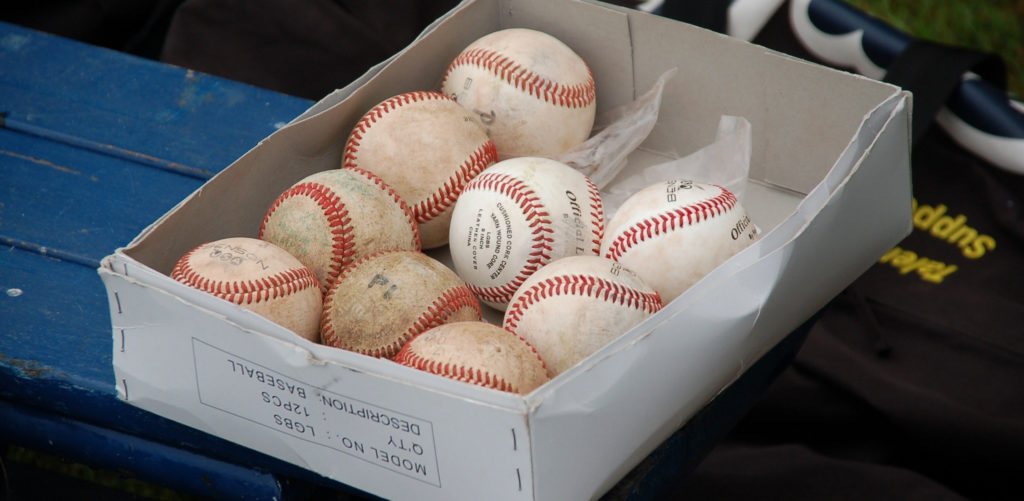
“Maybe you can write something about baseball,” he said. “You know, how this relates to that.”
Somehow, it all comes back to baseball for Chief. He has been retired a while now from a 30-year career as the trainer and equipment manager for Louisiana Tech, which is how I met him one awkward but now glorious day nearly 42 summers ago. It is hard to explain Chief precisely but … well …
It was July 1977 when the phone rang in the dugout of either the Astrodome or Dodger Stadium, can’t remember which. A Saturday afternoon. The call was for Chief, at the time the equipment manager for the Houston Astros.
Chief took the call. It was one of his best friends offering him the job in Ruston.
“Can I call you back?” Chief said. “We’re playing the Dodgers and we’re on national TV. I probably need to get off the phone.”
And his whole life’s sort of been like that. Funny. Lucky. Playful.
The great news here is that Chief has completed his treatments, has some air under him now, and is doing well. I can’t really help him thank Mt. Mariah United Methodist Church, which I’m sure he did magnificently the moment they offered the gift and, besides, his thanks is not why they did it anyway. But maybe there are some lessons I can get out of this. Chief has always been good about illustrating things for me without his knowing it.
You win some, you lose some, but you dress out for all of them: It took some doing, but Chief rested as much as he could and never missed any of those first pitches at the hospital. Seventy percent of life is 90 percent just showing up … or something like that.
Take early BP if you need it: There was a rod involved in the treatment, and they have to get that rod in a position to zap with medicine the ailing part inside you. Chief said you could always tell “when they put the rod in and when they took it out.” Matter of fact he was, and it makes me wince when I think of it but there you go. Chief doesn’t sugarcoat stuff. The point is, bat first so you get that fresh, first rod of the day. He told me this same thing before my colonoscopy; handy information.
Be the teammate you want others to be: Don’t be “that guy.” Show up for treatment. (Good job Chief!) Keep your gear clean. And quit thinking so much: you’re hurting the team. Just do the next right thing.
Don’t make the first or last out of the inning at third: Patience. Be smart. Chief kept going for checkups regularly and that’s how his situation was detected early. Give your team its best chance to win.
Be grateful you’ve got a jersey: A grateful attitude for existence will get us all down the road a good ways; we all could get cut tomorrow so … Meanwhile, we’re lucky if we get to be on a squad like the one at Mt. Mariah United Methodist Church.
Finally,
If you’re pitching, don’t give in; and if you’re hitting, go down swinging.
-30-
By JOHN JAMES MARSHALL/Designated Writers
Once again, they didn’t clear it with me, but the NCAA will have some rule changes for the 2020 season. It’s not official yet, but these are the recommendations.
Nothing really all that major, but a rule change is a rule change. So we must discuss.
Here’s what they have come up with, in no particular order of importance:
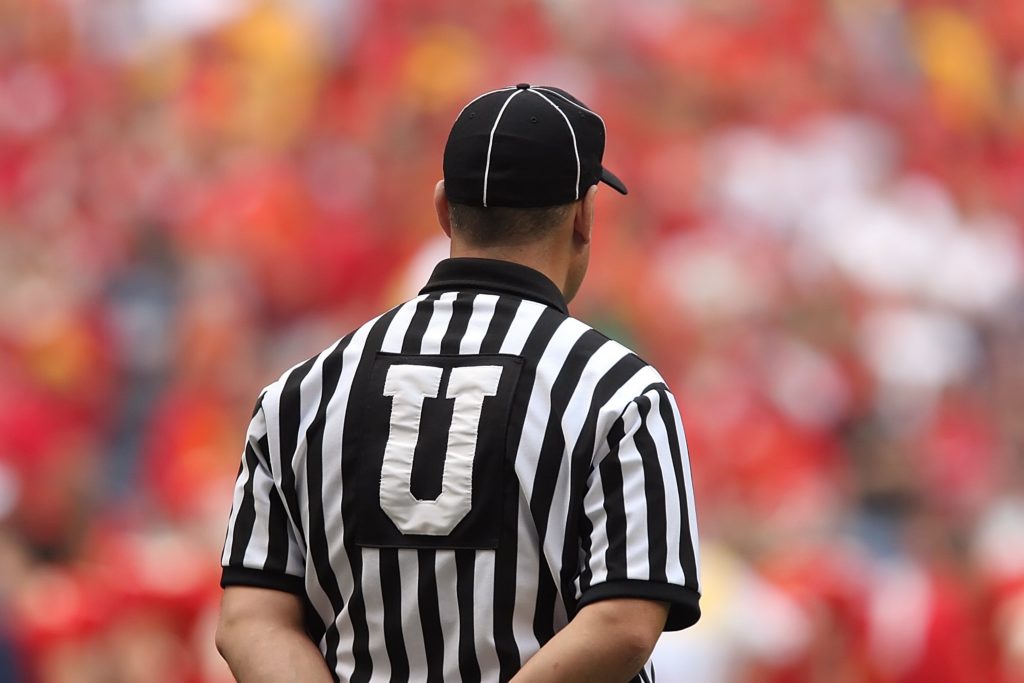
** Putting in a two-minute time limit for officials to make decisions on instant replay. It’s a step in the right direction, but it shouldn’t take two minutes. We don’t need the triple magnified angle and we don’t need to run it back and forth looking for something that isn’t there. A better solution is this: Make the call on the field. Then ask a replay official, who isn’t watching the game and doesn’t know what the call is, to make the call based on 60 seconds of review. He has no prejudice going into it. If he makes the call, it stands. If he can’t tell, it reverts back to the call on the field and he goes back to watching Netflix. Done.
** Allow players who have been ejected for targeting to stay on the sidelines, instead of having to go to the locker room. What took you so long? A guy gets his helmet in a bad spot because the ball carrier ducked at the last second and that’s a gots-to-go situation? Let ’em stay and avoid the perp walk like he’s some hardened criminal.
** Having the officials take jurisdiction over the field 90 minutes before the game instead of 60. The object here is to prevent pre-game scuffles because more and more, players are coming out to warm up earlier than before. Somebody punts into the wrong end of the field or somebody runs through the wrong warmup line. I guess there’s always the possibility that something could break loose 91 minutes for kickoff, but we’ll take our chances on that.
**Limiting the amount of duplicate jersey numbers to two to help avoid confusion. Then why have two? Shouldn’t it be zero? This should never have become an issue. When the freshman walked into the locker room and said “I want No. 7,” the equipment manager should have said, “We don’t have 7 available, The All-American over there has it. Could I interest you in No. 46?” Coaches got so scared that Joe Bluechipper wouldn’t come to his school unless he got his favorite number that they all backed down and gave in. I’m a big jersey number guy, but I also believe in making the most of the number they give you. Which leads us to …
** Because they are limiting the double numbers and because single digit numbers are now the rage, the No. 0 is now a legal jersey number. First of all, there are mathematic semantics to deal with. Is zero really a number? Before you laugh, you might want to do a little research. (There’s this thing called Google that might help.) And basically what you will find is that of course it’s a number … except when it isn’t. Math geeks, y’all take it from here. No doubt that all players whose last names begin with ‘O’ will want this, as will most defensive linemen. It just fits them. Quarterbacks are too pretty to wear No. 0 and wide receivers are too hung up on looking pretty. Zero isn’t pretty. But if someone’s last name is “Coke”and he asks for No. 0, how big of a name, image & likeness check will he be getting!