Simple Feed

Sunday’s loss to LSU might have stung the Northwestern State baseball team, but the sweetness of Saturday’s win over San Diego State will be remembered for a long time. By a lot of people, especially some special ones.

By DOUG IRELAND/Designated Contributor

CORVALLIS, Oregon — Cracker Brown. Herbie Smith. Johnnie Emmons. Jim Wells. Dave Van Horn. John Cohen. Mitch Gaspard. Lane Burroughs.

None of those former coaches called a pitch or flashed a sign Saturday as Northwestern State overwhelmed San Diego State 9-0 and advanced in the NCAA Baseball Championship’s Corvallis Regional. But those Demon dugout icons, and their players, had an almost palpable presence in the NSU dugout and in the stands at venerable Goss Stadium, the oldest active baseball venue in the country, dating to 1907.

Demon baseball alumni are in the hearts of the 2018 club, which holds a deep allegiance to NSU tradition even though most of the squad only arrived last fall.

That was evident from the opening statement in NSU’s postgame press conference, from head coach (and former Academic All-America player) Bobby Barbier.

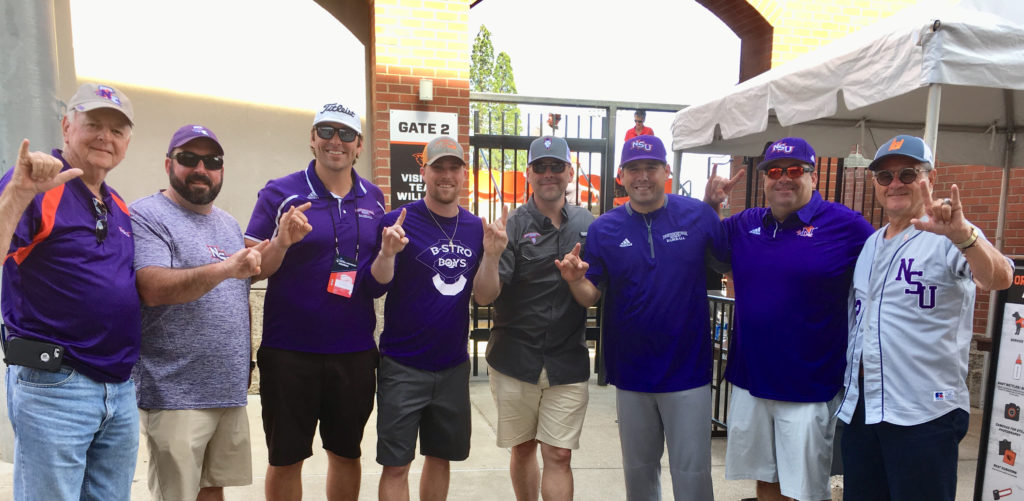
“What a win. I just took a picture with seven alumni who made the trip,” he said. “How special for this program.”

Those supremely-proud seven run the gamut from two who were recruited by and played for Brown, Ed Dranguet and Terry Alario Sr., to William Townsend, whose Demon days in 2016 came under Burroughs, with Barbier as an assistant coach. Alario Jr. was teammates with 1994 All-America pitcher Reggie Gatewood, and they spent considerable time swapping stories about Wells, who is recuperating from heart bypass surgery in his Tuscaloosa, Ala., home and is soon to be the recipient of a 2018 Demons’ autographed No. 17 jersey (his number as the Demon coach at his alma mater from 1990-94).

There was beaming Buddy Proctor, a sweet-swinging first baseman for Cohen’s 1999 and 2000 clubs. Another Academic All-American, Mike Jawoerski, played for Gaspard from 2005-08, with Barbier as a teammate on NSU’s last regional team in ’05, then watched him start his coaching career in 2007-08.

They took a group shot in the stands after NSU snagged an early 1-0 edge, but resolved to take another with Barbier after a win. They cashed in the chance before the head coach stepped into the postgame press conference.

Barbier has imbued his gritty team with a sense of responsibility to their predecessors. Case in point: in the moments after snagging NSU’s first-ever Southland Conference Tournament Championship last Saturday, the 33-year-old head coach reiterated a core value of his team.

“This is for all those former Demons, coaches and players, who worked so hard to reach this milestone,” he said.

So was Saturday. NCAA Regional wins are precious. This was the third in school history, standing alongside a 1994 8-2 victory over Illinois State in Stillwater, Oklahoma, and a 2005 4-3 triumph over Marist in Baton Rouge.

It was undeniably the most remarkable.

Every team wants to play its best in the biggest games. The Demons did exactly that Saturday, sending home an opponent with 39 wins, the Mountain West Conference Tournament championship, and a proud tradition including major leaguers like Hall of Famer Tony Gwynn and Colorado Rockies manager Bud Black. SDSU was in its fifth regional in six seasons.

They did so with the biggest victory margin in NCAA Tournament history by a Southland Conference team, dating back five decades.

It set off a tsunami of texts, Tweets and messages in various forms from NSU fans and alumni all over, soaking in satisfaction and looking forward to Sunday afternoon’s next chance to advance.

Proud SDSU alumnus Black, stinging from losing a $50 wager Friday to one of his players, former LSU slugger DJ LeMahieu, Saturday morning sought out the Rockies’ bullpen catcher, former Demon Aaron Munoz.

“We went $20, based off the pay scale of LeMahieu to Munoz,” Black told Rockies’ beat reporters before their game. “Batting champ payroll to bullpen catcher payroll.”

Munoz will enjoy the feel of that Andrew Jackson.

He’s one of countless Demons everywhere, bursting with pride, and anticipation, on the first Saturday evening in June. Especially the 2018 Demons, who are mindful of the past as they carve their own niche in NSU history.

“The alumni, and the seniors, is really who you play for,” said Maddox.

“All the alumni before us (inspire us),” said Smith, “so we’re getting out there and getting after it like they did.”

They were as good as it gets Saturday, silencing San Diego State.
Doug Ireland

By JOHN JAMES MARSHALL/Designated Writers

On the final day before he and his teammates traveled more than 2,000 miles to play in the most important weekend event of their baseball lives, there was one very predictable place you could have found Northwestern State junior pitcher Nathan Jones.

Not working on things in the bullpen. Not looking at spray charts. Not reviewing video.

Instead, it was the place you can usually find Jones when the Demons are not playing.

Bass fishing.

“It’s relaxing for me,” Jones said. “Anytime I’m not playing baseball or studying, I’m usually fishing somewhere.”

Fishing offers Jones the peace and solitude away from the pressure of being one of the NSU starting pitchers. The right-hander has been through a lot in his baseball career, but fishing doesn’t worry about arm slot or spin rate or how to get out of a bases-loaded jam.

It gives him the chance to think about how he has developed during his baseball career. From being an All-State selection to getting a last-minute scholarship offer. From getting the win in his first college game and a save against a College World Series team to a sophomore year when nothing seemed to go right.

From being a Friday night starter – usually considered to be a college team’s No. 1 pitcher – to having to move into a new role as the Sunday starter.

And most of all, learning how to handle his emotions when things didn’t go his way.

“I’m a lot more mature. I’m able to move from adversity and handle things a lot better. I’m able to command more pitches and throw a little harder. But the main thing is growing up a little bit.”

“When he played for us, his emotions got the best of him sometimes,” said Dusty Griffis, his high school coach at Loyola College Prep. “He’s gotten a whole lot better at seeing the game pitch by pitch instead of one big explosion. Nathan was such a hard worker and such a good baseball player that it didn’t affect his play or success. But it was a warning that if he didn’t control his emotions, it would affect him at higher levels.”

You might say this is Nathan Jones 2.0. But that might be oversimplifying things. And as he will tell you, things haven’t been that simple.

*   *   *

After winning the Southland Conference Tournament as the No. 3 seed, the Northwestern State Demons are in Corvallis, Ore., to play in the NCAA Regionals. Their first opponent will be the No. 3 team in the country – and the host team – the Oregon State Beavers.

Jones is scheduled to pitch in the third game – if there is one. The Demons are the fourth seed in the four-team regional, so the Demons will have to pull an upset for Jones to get a chance to pitch.

And if they do, it will certainly be a high-pressure situation for the right-hander. “I’m excited,” Jones said. “I’m ready to get out there and show everybody what we’ve got. We are playing bigger schools on bigger stages than we are used to, so I’m really excited. It’s the same game, just a lot more people watching.”

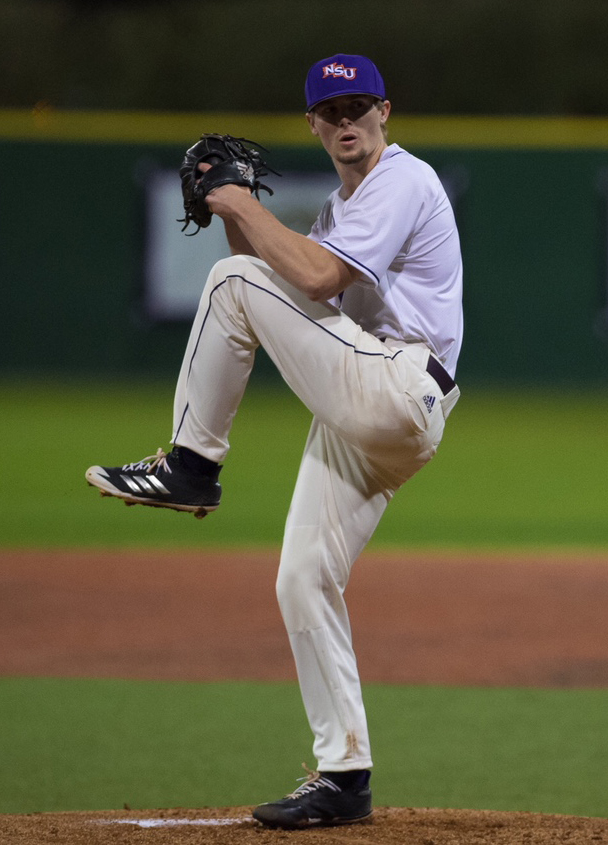
Nathan Jones

Not many people were watching Jones as he completed his high school career at Loyola. A pitching talent evaluator said Jones “only had 84 (miles per hour) in his arm” in projecting his development.

He was a solid pitcher for three years for the Flyers where he had 162 strikeouts in 161 innings. As a senior, he was 7-3 and was named to the Class 3A All-State team. But it wasn’t like colleges were beating down his door.

Including Northwestern State.

“After my junior year, they offered me a preferred walk-on spot, but I really didn’t feel like they were that interested,” Jones said. “I didn’t see myself playing much, so I went ahead and signed with LSUS. But in the summer after I graduated, I started throwing a little harder and they saw me in a tournament and offered me a scholarship.”

It didn’t take him long to make an impact on the mound for NSU, which surprised a lot of people. Namely, Nathan Jones.

In his first college game, Jones was the first reliever used by the Demons against Alabama State in a 1-1 game. “That was a shocker,” he said.

Jones entered the game in the eighth and kept pitching as the Demons won in 10 innings. Jones got the win.

Think that was special? Try this: In his third college appearance, the Demons were at Arizona to play the Wildcats. Jones was called in from the bullpen to pitch the final two innings and hold a 6-4 Demon lead. Jones faced six batters and retired all six to record his first save.

That same Arizona team went on to become the College World Series runner-up that season.

Jones would move into a starting role as a sophomore, but he and the Demons suffered through a tough year. Jones was 4-8 with a 4.86 ERA. He led the team in innings and strikeouts as the Friday night starter but the Demons were 20-34 overall and went nowhere.

Jones returned as the Friday night starter in 2018 and had a couple of good starts to begin the season. But for the next month, things began to change. He lost three out of four starts and only lasted 3 1/3 innings in the other game.

Then came a change that turned his season around. Jones was moved from the Friday starter to the Sunday starter for Northwestern State. “I started to feel like everything was starting to come together after that,” Jones said.

The results were immediate. His first game as the Sunday starter was against Southeastern Louisiana, and Jones pitched a complete game with 10 strikeouts.

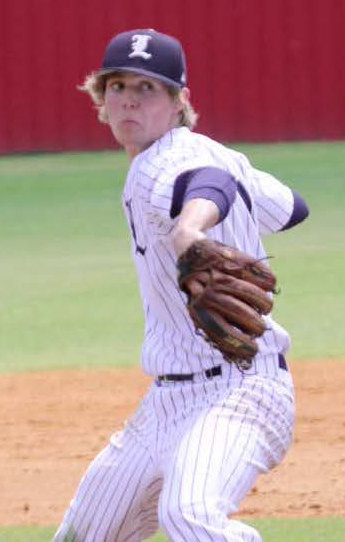
Nathan Jones at Loyola

“The change made me take a step back and look at everything and re-evaluate myself,” Jones said. “It made me work a lot harder, and I changed my whole approach. I did a lot of research and studying and extra time on the field. It’s seemed to pay off.”

In other words, his hard work has paid off. Which doesn’t surprise Griffis in the least.

“He is, by far, the epitome of hard work paying off,” he said. “He is the hardest working kid I have had in 15 years of coaching. I could not be more proud of him. But for him to have the success that he has had because of hard work makes you even more proud.”

“I learned a lot of from the older guys when I got here as a freshman,” Jones said. “It taught me a lot of things. How to handle failure and handle emotions the right way. I set my goals really high. Unreasonably high. I’m just trying to do my absolute best to try to get the goals I’ve set. I’ve had a good year, but everyone has had a good year.”

There is also the chance that Jones might get a phone call next week during the Major League Draft. “If I’m blessed enough to get a chance to play at the next level, that would be great,” he said. “It’s something every little kid has dreamed about. But right now, I’m just focused on this regional.”