Once the new Shreveport Baseball Association, made up mostly of local oilmen, had raised the money to purchase the Galveston franchise and build a new stadium, things moved quickly.
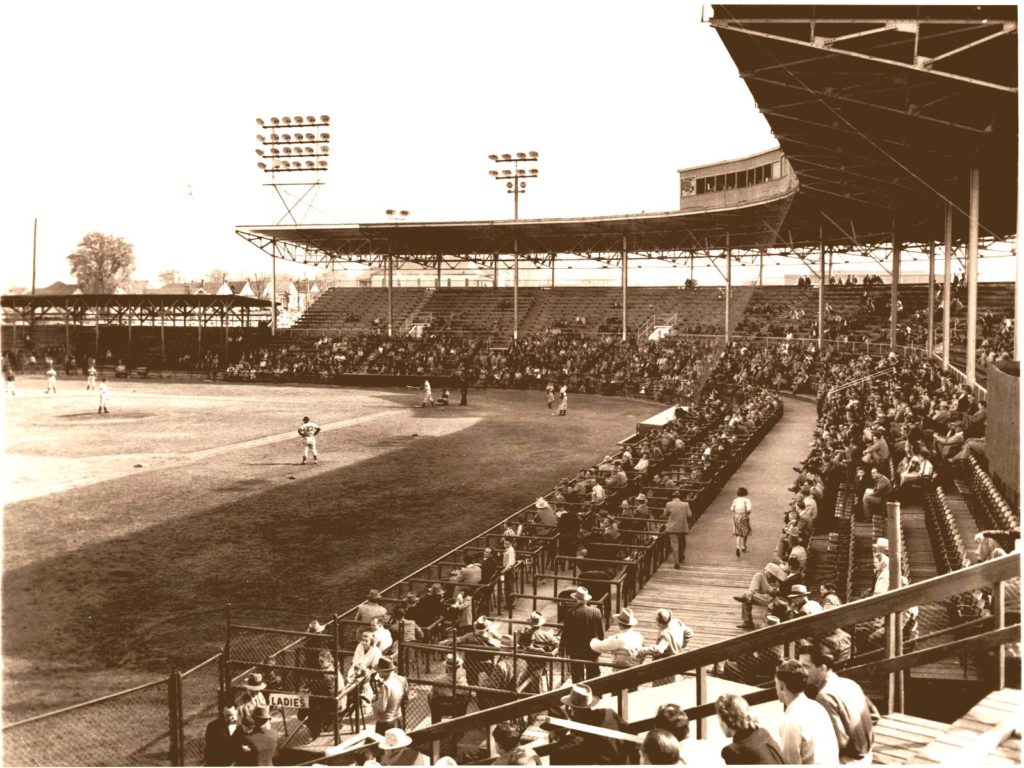
Texas League Park, known as SPAR Stadium for more than half of its 47 years as home of Shreveport’s professional baseball team, was dedicated on May 10, 1938. It was a grand day in the city.
That was the day the 4,500-seat grandstand first was used. Cost estimate of the stands and the areas — offices, concessions stands, restrooms, storage space, etc. — was $50,000.
It was a Tuesday and, thanks to a Chamber of Commerce effort, many downtown Shreveport businesses closed early (at 3 p.m.) to allow fans to go to the ballpark for the celebration/stadium dedication before the 4:30 p.m. Sports game with Oklahoma City.
But actually, there was Texas League baseball on the grounds before that. Although construction on the park, and preparation of the playing field, had begun by March 1, Opening Day at home was Wednesday, April 13, when the Sports faced the Beaumont Exporters.
The grandstand wasn’t ready, but with bleachers on the left- and right-field sides, reserved box seats, and standing room, a crowd estimated from 5,500 to 7,000 watched the Sports at home for the first time since Biedenharn Park — in close proximity to this park — had burned extensively on May 4, 1932.
Without a Texas League home park from that day, Shreveport soon was out of the league. But when the struggling Galveston franchise became available, Shreveport’s leading baseball forces put their plan — and money — in play.
On Jan. 14, they gave the Texas League office a verbal notice to purchase the team, contingent on a plan to raise $55,000 — for the price of the team, plus construction of a grandstand, bleachers and lights.
Stock in the Shreveport Baseball Association was $10 a share, and the Shreveport oilmen started the drive with their contributions. But it was Chamber of Commerce president Henry O’Neal who was the driving force, and some 3½ weeks later, about $40,000 had been raised.
On Feb. 9, the transfer of franchises was made official in Galveston. Sale price of the team: $23,000. The Shreveport Sports were back in business.
On Feb. 15, a nine-man board of directors for the Shreveport Baseball Association was selected, and Bonneau Peters — longtime oilfield scout and booster, benefactor, fan of Centenary College athletics and longtime baseball enthusiast — was soon chosen as team president.
Walter Morris, the current president of the Evangeline and Cotton States Leagues who much earlier in his 35 years in baseball had been Texas League president and then business manager of the early 1930s Sports, was to return as business manager.
A couple of weeks later, the stock drive had reached $51,000.
Plans were announced for a new grandstand, with some 3,000 general admission seats, 600 reserved seats and 720 box seats, plus east- and west-side bleachers totaling about 1,500 seats. So that made for a seating capacity near 6,000.
On Feb. 23, it was announced that the grandstand would be made of concrete and steel, not wood as the woebegone Biedenharn Park stands had been.
The Texas League, with president J. Alvin Gardner, then agreed to loan the Shreveport club $20,000 — to be paid back at 6 percent interest over an eight-year period — to help fund the club and pay for ballpark construction.
The league would own the ballpark, with an agreement to sell it to the team for $18,500. (Because attendance and club revenue exceeded expectations, the ballclub was able to repay the TL loan and purchase the ballpark much more quickly than anticipated.)
The club’s revenue was boosted by the sale — by Gardner’s estimate — for
concession rights of $8,000 and radio broadcast rights of $5,000 (to KWKH).
The Shreveport Times reported that the playing field would get require three weeks’ preparation for a game. The outfield needed considerable work; the infield needed dirt filling.
On Opening Day, the ballclub took part in a parade through downtown began and ended at Municipal Auditorium, then proceeded to the ballpark for a 3:30 p.m. start — and the start of 38 seasons in Organized Baseball there.
The ballpark’s first home run, by first baseman Pete Fleming with two men on in the third inning, helped give the Sports a 4-0 lead. But they lost 8-6 to Beaumont.
The next Opening Day — for the grandstand — went much better, a 3-0 victory for Shreveport against Oklahoma City, with Bill Gick, cut by Dallas a few weeks earlier, pitching a five-hitter.
By 1939, the listed capacity for the ballpark, with added bleachers, was 9,700.
A little more than 47 years after it opened, it was Closing Night at SPAR Stadium.
On Aug. 31, 1985, the paid attendance was 1,539 as the Shreveport Captains beat the Arkansas Travelers 9-3 in a wreck of a stadium — roofless, but the steel beams still (shakily) standing — as an era closed.
A new era, at Fair Grounds Field, awaited a few miles away.
-30-