Simple Feed
July 18, 2019
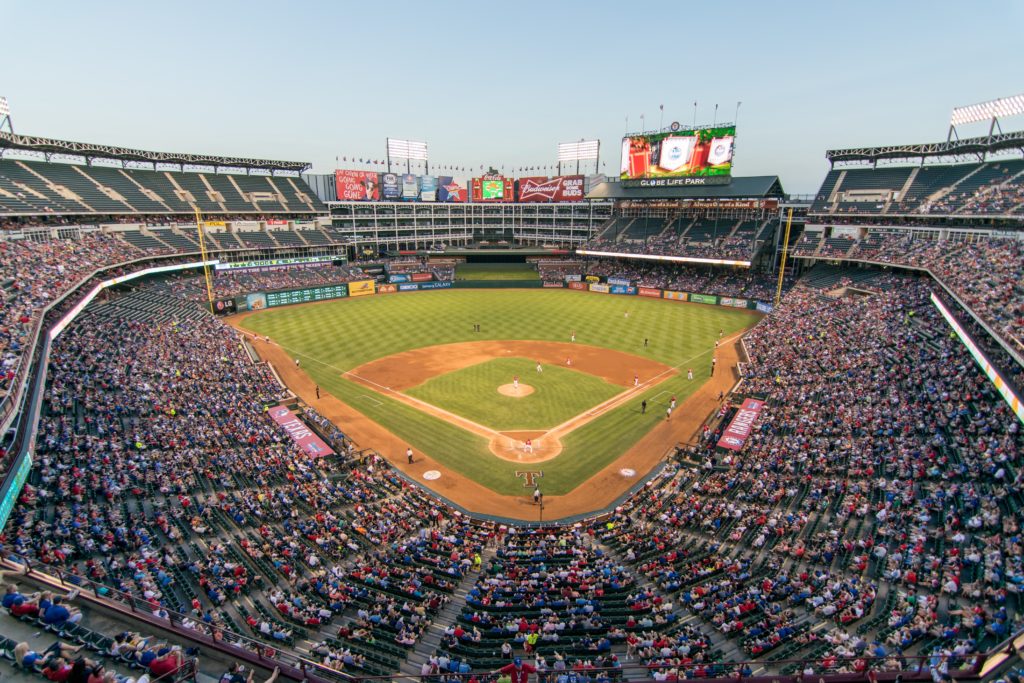
Baseball should shift away from stupidity
By JOHN JAMES MARSHALL/Designated Writers
I count myself as a baseball purist, yet I’m all for the designated hitter. (Which probably makes me a baseball hypocrite.) I’m all for change in the sport, but not overnight. I’m willing to listen to the latest ways to improve the game, as long as they don’t go too far.
They are going too far. (Or thinking about going to far.)
Baseball should change organically, not by vote or decree. Putting a runner on second base in extra innings to keep from games lasting too long? That’s changing the fundamentals of the game.
And this idea that they’ve come up with in a MLB-owned minor league of batters being able to run to first on any ball that gets away from the catcher at any point in the at bat — stealing first, for lack of a better description — is just as inane.
Too many home runs is not a problem; too many people striking out or walking is a problem. I don’t like all the shifts you see today, but it’s a natural reaction to what scouting tells you. And it works. Don’t legislate it out; learn how to beat it.
The ball is not juiced; it’s just being hit in a certain way (launch angle, exit velocity) that allows teams to functionally beat the shift by hitting over it.
It wasn’t that long ago that games were played in large, Astroturf-covered stadiums in which people stole bases all the time. Go back a couple of more decades and there was a year in which only one player in the American League hit over .290. You want to go back to that?
Just don’t be a prisoner of the moment. There’s no need to start making changes just for the sake of change or for another TV viewer point share. Finding ways to speed up the game is not changing the game. That’s OK.
Baseball will evolve. It always has and it always will.
July 16, 2019
MOON LANDING AIN’T NUTHIN’ BUT A TANG!
(This column ran originally July 14, 2019 in The Times and The News-Star.)
Land men on the moon? Return safely?
Whatever. America can do that. Give us something hard to do, like figuring out whether to write “who or whom” or “lie or lay.”
Saturday, June 20, marks the Big Day, the 50th anniversary of man first walking on the moon. One account sums up the day like this:
“On July 20, 1969, the human race accomplished its single greatest technological achievement of all time when a human first set foot on another celestial body.” The crew returned to Earth safely July 24.
The moon held much fascination to my 9-year-old brain then. I was figuring out there were places like St. Louis and Boston and Philadelphia because I could read and knew there were Cardinals and Celtics and Phillies there. Still, I couldn’t fit firmly in my mind where these places were. But I could look up almost any night and see the moon. I knew it was there.
To honor the moon landings and the success of Apollo, this month we are rating the Apollo missions. Last week we lifted off. This week we land.
So far, here is where we are.
One is Apollo 11, the undisputed heavyweight champ.
Two is Apollo 13: “This could be our finest hour.” Flight director Gene Kranz was a hoss.
Three is Apollo 8 and gave us Earthrise and the reading from Genesis from space as the crew circled the moon, Christmas Eve 1968.
Now the rest of this list:
Four is Apollo 14: After screwing a six-iron head into a dirt-gathering tool, Alan Shephard hooked a golf ball into a crater before taking the first moon mulligan. With a “one hand chili dip shot” he hit a ball 200 feet, demonstrating that with the moon’s one-sixth gravity of the Earth’s, the ball should go six times as far on the moon as it would on Earth if the ball were hit with the same clubhead speed. “It was 35 seconds in the air,” Shephard said later. Niether he nor Edgar Mitchell brought a ball retriever so there’s a golf ball in a crater in the Fra Mauro formation just east of the Sea of Storms. I think it’s a Titleist…
Five is Apollo 15: Commander David Scott did an experiment for us on live TV. He dropped a hammer and a feather, held chest high, at the same time, and since there was no air resistance, the two objects hit the lunar surface at the same time. Had Galileo been watching, he’d have said, “Guys. I told you more than 300 years ago that this would happen: Objects fall at the same rate regardless of mass. Geez…” Scott proved Galileo right and Aristotle, a big “mass makes all the difference” guy, wrong. This was also the first appearance of the lunar rover.
Six is Apollo 7: See last week’s column; the arguing and all!
Seven is Apollo 16: Second lunar rover. I liked the lunar rover.
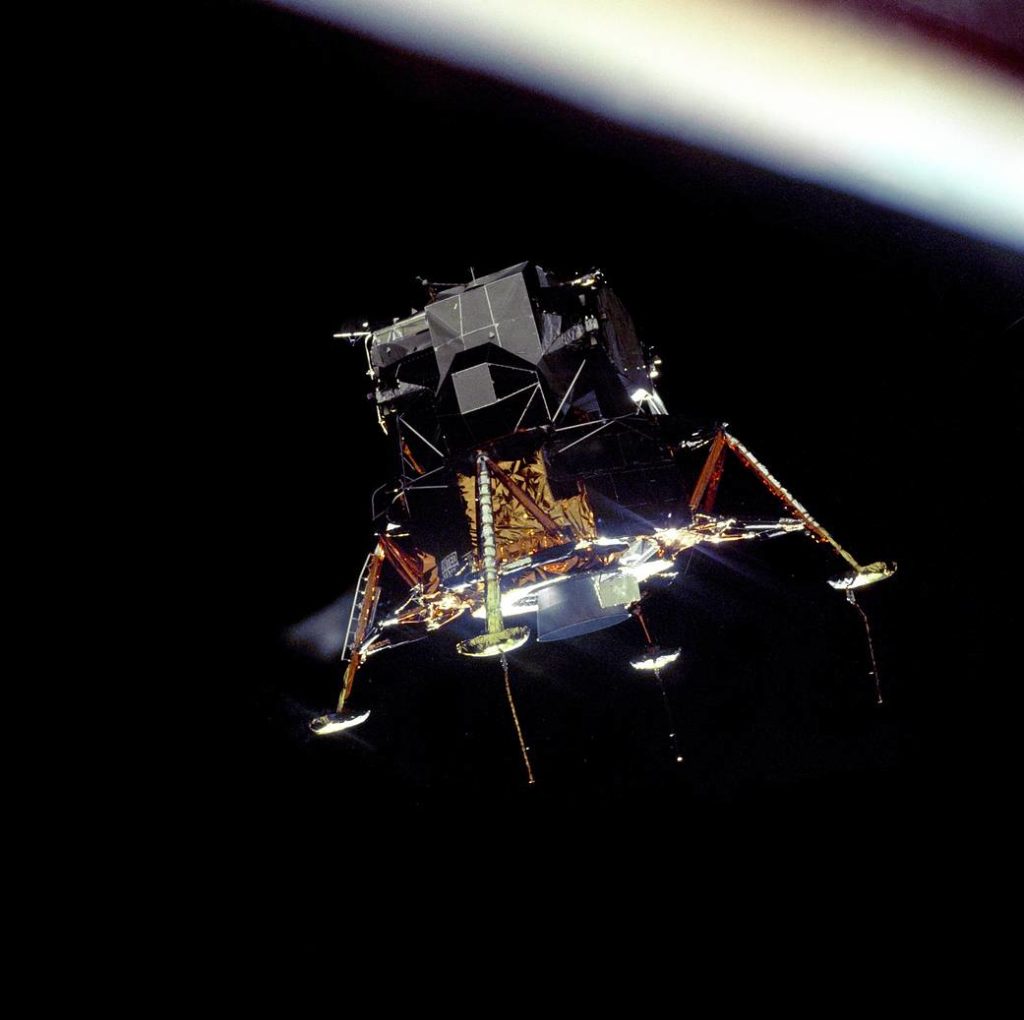
Eight is Apollo 10: Went to the moon and tested the lunar module a few miles above the lunar surface; this was the final warmup to the first moon landing.
Nine is Apollo 17: Third lunar rover situation. Considered a partial failure because they couldn’t find Shephard’s golf ball. All Apollo missions after this were cancelled. (Seems harsh; it was just one or two balls…)
Ten is Apollo 12: Hate to say it but it seemed sort of a downer after Apollo 11.
You’ll remember the space race was launched September 12, 1962 when President John F. Kennedy made his famous “We choose to go to the moon” speech in Houston in Rice Stadium, where Louisiana Tech plays football this season on September 28 against the Rice Owls.
“We set sail on this new sea because there is new knowledge to be gained, and new rights to be won, and they must be won and used for the progress of all people,” Kennedy said.
And all that’s fine but it was also very important at the time to beat Russia on the world stage. Mission accomplished. (We kicked their butts.)
-30-