Simple Feed
January 22, 2020
WHEN A WAR MOVIE’S NOT A WAR MOVIE
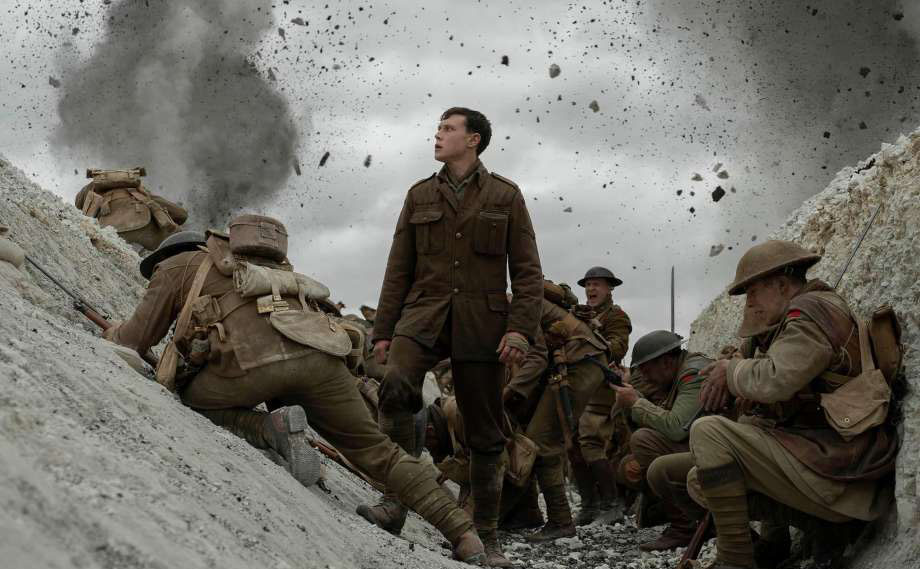
(Originally ran Sunday, January 19 in The Times and The News-Star.)
A rainy weekend afternoon with no football on television meant a solo trip to World War I.
You’ve probably seen the previews of 1917, of a young soldier running by a long trench while mortars explode behind him. My advice here is when you go to this movie, don’t leave and go to the bathroom or get popcorn during this part. Just saying.
The preview was so pretty (in a war kind of way), so haunting and compelling that I could not get to the theatre fast enough. Glad I did and I’ll tell you why because you might want to go.
But first, the other movie I saw over the holidays was Bombshell, an account of the real-life history of abuse — more than a decade long — at Fox News, a sexual harassment scandal that ended with the firing and complete downfall of Roger Ailes, the chairman and CEO of Fox News and a creepy dude.
John Lithgow plays him in the movie and is perfectly disgusting. This is a guy who won three Emmys for Outstanding Lead Actor in a Comedy Series on 3rd Rock from the Sun, and his portrayal of Ailes is the opposite of funny. You watch him in no more than two scenes and you feel you might need to go get a tetanus shot.
So I guess I saw two war movies, just on different battlefields. Truth be told, Bombshell is probably more of a war story than 1917. Even the title is better. There is a sense in the end that the good guys, who are women, won. But it’s a messy story for sure. Even though there are all sorts of pretty people in it, you feel sort of creeped out while you’re watching it and when it’s over.
1917 is a whole other ballgame. Two young British soldiers, napping just behind the front lines in World War I, are called to the front and told to deliver a message that will call off an attack planned for the next morning. It will take them eight hours to reach the troops, and if they don’t make it, 1,600 British soldiers will walk into a German ambush. One of those soldiers involved in the next morning’s planned attack is the older brother of one of the young men who must deliver the message.
In other words, things are a bit urgent, and very personal.
Once you see it, you’ll agree that 1917 will win every award there is for cinematography. They might even have to make up some other technical awards to give these people. It’s that pretty and realistic. This has to be the way WWI looked, from the trenches to the bombed cities to the bloated rot.
It’s filmed as one continuous shot, through the magic of editing. So the race seems to be in real time, which heightens the urgency.
I felt I should have liked it more so I called a couple of creative friends who loved it and got their take. After talking to them, I realized I’d wanted The Bad Guy to get killed, but there wasn’t a bad guy. And this wasn’t really a war movie. It was better than that.
It’s about young, idealistic men given an almost impossible life-or-death task. A person has to deliver a message in a set amount of time, while people are trying to kill him. That’s urgency. And you wonder, “Could I have done that?”
The two young actors are so natural and believable, and you’ve never seen them so they don’t get in the way of the story for being famous.
And finally it’s about family, one brother trying to save another, one soldier/brother trying to save another. Or 1,600 others.
This same story could have been set in dozens of other places; it just happens to be in the French countryside, wasted by war.
Another tip: When the dogfight takes place — one of the planes is heading toward an old barn and is also in the trailer — don’t go to the bathroom or to get popcorn then either. Ditto for when the two guys first move into the Germans’ abandoned front lines and into a bunker.
Bottom line: if you can see only one of these two movies, don’t go to the war movie. Go see 1917 instead.
-30-
January 22, 2020
Walking through Hall’s door isn’t easy
By JOHN JAMES MARSHALL/Designated Writers
There is the Baseball Hall of Fame and then there are the rest of the Halls of Fame. Your Football, your Basketball. Your Rock & Roll. Your Bridge Players. Baseball is over here by itself; everyone else on the other side of the room.
Which is why we love it so. It’s baseball, which is good, and it’s the Hall of Fame, for crying out loud. How are you going to beat that?
No Hall of Fame elicits such passionate discussion about who belongs and who doesn’t. Shoeless Joe Jackson has been dead almost 70 years and he’s still getting love over his Hall candidacy. And he isn’t even on the ballot.
One of the great days on the baseball calendar is the day the new Hall of Fame class is announced. It gives baseball fans something to talk about even though pitchers and catchers won’t report for another few weeks.
Tuesday’s announcement summed up just about every bullet point that is surrounding the Hall of Fame these days as Derek Jeter and Larry Walker made it in, Curt Schilling didn’t and Roger Clemens and Barry Bonds are treading water, but the pool is about to get drained.
Let’s start with Jeter. It’s not a matter of whether he deserved to get in; every knowledgable fans knows he deserves to. Expect one. That would be the one guy who didn’t vote for him. Otherwise, he would have been unanimously elected, which doesn’t make any difference, except for Vinny from the Bronx and Rocco from Yonkers. Those guys think it’s a crime against nature that “Jeet-uh” got snubbed by some ink-stained wretch. It used to be that being a first-ballot Hall of Famer was a big deal (this makes seven years in a row, by the way), but because everything is bigger in New York, that’s not good enough. Especially when Mariano Rivera got in unanimously last year. Doesn’t matter to me, but one vote? That does kind of stink.
Larry Walker was a really good player for a long time. That’s Item #2 on the list — guys like Larry Walker are getting in the Hall of Fame. Very good hitter, played good defense and had a rocket for an arm in right field. So did Dave Parker. So did Dwight Evans. More and more, the really, really good players are getting in. Used to be, only the great ones got in. There is no doubt that the bar has been lowered, but not tragically so. It was Walker’s 10th and final year to be up for election and that had to actually help his chances. Up until now, he was a guy who got a decent amount of votes but was never the guy on deck to get in. He picked up an amazing 250 votes in just four election cycles. Look, the Hall of Fame isn’t going to fall down because Larry Walker is going in.
Schilling is an interesting case because there are those who feel he shouldn’t get in because of perceived character issues after he stopped playing. Bad business moves, inappropriate comments and generally not endearing himself to the electorate. And there is the perception that next year, he will be far more electable because there are no new names on the ballot that will have any kind of support (Mark Buehrle?). He got 70 percent of the vote this year (75 percent needed), so he’s knocking on the door. It looks like he will get in, but nothing is a given with the Hall of Fame.
And then there are Clemens and Bonds. Will next year’s lightly regarded class make it easier for them to get in? Or if Larry Walker can jump them this year, couldn’t somebody do it next year? Or are voters are softening their hard-line stance against those who somehow associated with steroids? They have two more chances to make it.
But for now, it’s more about who did make it rather than who didn’t.